האחדות
The Unity
Shchunat Ezrat Yisrael, Yerushalayim · Since 1910
Tel Aviv Apartment

Category: Jerusalem

Jerusalem housing-market news from Tel Aviv Apartment: CBS price data, rents, building permits, urban renewal (TAMA 38 / pinui-binui) and transport projects, with sources and dates.

  • Rehavia and Talbiyeh Church Lands: Supreme Court Ends KKL Case as Sub-Lessees Report Stalled Talks

    Rehavia and Talbiyeh Church Lands: Supreme Court Ends KKL Case as Sub-Lessees Report Stalled Talks

    By David Nataf
    26 September 2026 — Jerusalem

    Jerusalem — The legal and commercial uncertainty over the former Greek Orthodox Patriarchate lands in Rehavia, Talbiyeh and Nayot deepened this summer: on 16 July 2026 Israel’s Supreme Court refused to rehear a Patriarchate lease case brought by a subsidiary of the Jewish National Fund (KKL-JNF), while sub-lessees say talks over their apartments’ future have stalled. A district-court ruling reported on 20 August could, according to TheMarker, give some of them a new legal argument.

    Key facts

    • The land: about 500 dunams in Talbiyeh, Rehavia, Nayot and around Liberty Bell Park, with about 1,000 housing units, hotels and public institutions (Nadlan Center).
    • The leases: KKL-JNF leased the land from the Greek Orthodox Church in the early years of the state for up to about 99 years, ending around 2051–52; residents are sub-lessees of KKL-JNF.
    • Ownership: the Church sold the land in 2017 to a private group; in January 2023 the group sold it to Extel, controlled by US businessman Gary Barnett, for ₪750 million (Nadlan Center).
    • 16 July 2026: the Supreme Court rejected a KKL-JNF subsidiary’s request for a further hearing in a Patriarchate lease dispute; KKL-JNF will not receive the $13 million it sought (Globes).
    • Disputed claim: a sub-lessees’ forum says apartment values have fallen by 50% — a figure not independently verified.
    • 20 August 2026: TheMarker reported a Central District Court ruling on a Rehovot plot that could be invoked by Jerusalem sub-lessees.

    The Supreme Court ends one dispute

    On 16 July 2026, the Supreme Court rejected a request by a KKL-JNF subsidiary for a further hearing in a case over the extension of its lease on Patriarchate land, Globes reported. The decision leaves in place an earlier Supreme Court majority ruling that a detailed interim document, read out at a ceremony between the parties, was a stage in negotiations rather than a binding contract, because the requirements of writing, intent and specificity had not been met. As a result, KKL-JNF will not receive the $13 million it had sought, according to Globes.

    In the earlier ruling, Justice Ofer Grosskopf criticised the tendency of Israeli courts to treat interim documents as binding agreements. “We would do well to shift the direction of its movement and restore to Israeli contract law a certain measure of formalism,” he wrote, as quoted by Globes (translated from Hebrew). In rejecting the further hearing, the court said this was not a new legal rule that would justify one.

    Sub-lessees: “our values have fallen by 50%”

    More than 100 sub-lessees say that talks to settle their rights with Extel have made no progress since a change of management at KKL-JNF at the start of 2026, when Eyal Ostrinsky became chairman, Nadlan Center reported on 24 July. According to the residents, the uncertainty makes apartments hard to sell or mortgage and holds up urban-renewal projects, while the leases expire around 2050.

    “The value of our apartments has plummeted by 50%,” said Doron Shmueli, a lawyer who chairs the forum of Jerusalem KKL-JNF land lessees, quoted by Nadlan Center. The figure is his; it has not been independently verified, no transaction data supporting it was published, and neither KKL-JNF nor Extel has endorsed it. Shmueli said a direct negotiation between residents and the landowner had produced “a balanced offer” and called on KKL-JNF and the Jerusalem Municipality to join the talks.

    Residents are divided. About 200 sub-lessees have petitioned the High Court of Justice to have the leases extended, Nadlan Center reported; in September 2025 the Supreme Court declined to freeze talks between KKL-JNF and Extel but ordered KKL-JNF to hold a public hearing and share the details of any agreement with sub-lessees before signing. Others are pursuing agreements with Extel: more than 150 families have signed documents to advance arrangements, according to Nadlan Center, under outlines that would offer full ownership of new apartments after pinui-binui redevelopment, or a long-term lease extension.

    People close to Extel told Nadlan Center that “more and more residents are joining the move to secure their rights” and that “the ball is now mainly in the court of KKL-JNF and the Jerusalem Municipality.” KKL-JNF said it has held and is holding meetings with the company that acquired the land and with others “in an attempt to reach a comprehensive arrangement, while caring for the rights of the residents,” noted that proceedings are pending before the Supreme Court, and said that “significant decisions will be made in the near future.”

    A Rehovot ruling with possible Jerusalem implications

    In a separate case, the Central District Court in Lod ruled that a family holding a 1.8-dunam former orchard in Rehovot has “a leasehold right with exceptional and special aspects,” because of a transaction made with KKL-JNF in the 1950s, TheMarker reported on 20 August 2026. According to TheMarker, the ruling could be used by owners of about 1,000 apartments, public institutions and hotels in Jerusalem who are sub-lessees of KKL-JNF on the land it leases from Extel. The ruling concerns a different property; whether it would apply to the Jerusalem leases has not been tested in court.

    Why it matters for the market

    The affected streets are among Jerusalem’s most expensive. Closed-deal medians compiled by TAA from Tax Authority records put Rehavia at about ₪48,300 per square metre and Talbiyeh at about ₪42,100, with wide gaps between sources for both neighborhoods — see our Jerusalem sale prices by neighborhood. Those figures do not separate apartments on former Patriarchate land from others, so they cannot confirm or refute the sub-lessees’ claim.

    Related: Jerusalem sale prices by neighborhood · Jerusalem hub

    Featured image: AI-generated illustration (Grok Imagine). It is an illustration, not a photograph of an actual street in Rehavia or Talbiyeh.

    Sources

    1. Globes — The Greek Patriarchate and the Jerusalem lands: there will be no further hearing (Jennifer Sylon, 16 July 2026, Hebrew)
    2. Nadlan Center — “Apartment values plummeted 50%”: church-land lessees in Jerusalem accuse KKL (Dror Nir Kastel, 24 July 2026, Hebrew)
    3. TheMarker — Precedent-setting ruling on a Rehovot orchard could shake land ownership in the heart of Jerusalem (Simi Spolter, 20 Aug. 2026, Hebrew)
  • Jerusalem Approves Hasbon Compound Plan: About 950 Homes and Three 41–43-Storey Towers

    Jerusalem Approves Hasbon Compound Plan: About 950 Homes and Three 41–43-Storey Towers

    By David Nataf
    26 September 2026 — Jerusalem

    Jerusalem — The Jerusalem District Planning and Building Committee approved on 6 September 2026 the urban-renewal plan for the Hasbon compound in the city centre: about 950 housing units, including some 200 rental apartments, in three towers of 41 to 43 storeys and lower buildings around King George, Hillel and Meir Shaham streets. The 27-dunam site lies next to the approved route of the light rail’s Blue Line, according to reports by ice.co.il, Nadlan Center and Magdilim.

    Key facts

    • Decision: approved by the Jerusalem District Planning and Building Committee on 6 September 2026, after hearing objections.
    • Site: about 27 dunams between King George, Hillel and Meir Shaham streets and Sherman Park, beside the approved Blue Line.
    • Housing: about 950 units, of which about 200 are for rent for 15 years; 96 existing units to be demolished.
    • Height: three towers of 41–43 storeys, plus lower buildings.
    • Other uses: about 4,600 m² of hotel space, 14,000 m² of commerce and employment, 7,200 m² of public uses and 4,500 m² of student housing.
    • Planners: MVRDV (Netherlands) with GEHL (Denmark); the plan was submitted by Even Israel Ltd.

    What the plan includes

    The compound currently contains commercial, office and residential buildings, with several important historic buildings at its centre known as the “Anton Hasbon compound.” Much of the site has served for years as a kind of “backyard” of the city centre, with open-air parking and areas closed to the public, ice.co.il and Nadlan Center reported.

    The plan combines the renewal of some existing residential buildings with an intensive urban block: three towers of 41 to 43 storeys alongside lower-rise buildings, mixing housing, commerce, employment and hotels. It provides for about 950 housing units, of which about 200 are designated as rental housing for 15 years, about 4,600 m² of hotel space, about 14,000 m² for commerce and employment, and about 7,200 m² for public uses, including a public library, an indoor sports hall and kindergartens. Ninety-six existing housing units, along with older commercial and office buildings, are to be demolished.

    The historic buildings are to be preserved and integrated into hotel uses around a large public square at the heart of the block, connected to the surrounding streets by pedestrian passages, alleys and courtyards, according to the District Committee. The plan also includes the redevelopment of Sherman Park.

    Changes after the objections

    The plan was approved for deposit in May 2025, which opened the objection process, Magdilim reported. After hearing the objections, the committee added 4,500 m² of student housing and decided to preserve the “Beit Pygmalion” building at the corner of King George and Meir Shaham streets, designed by architect Otto Hoffmann in the 1950s. The reports did not detail who filed the objections.

    “This is an important plan that continues the momentum of renewal in Jerusalem’s central business district and offers architectural and design excellence, giving a new interpretation to the historic fabric of the city centre,” said Dan Kinan, the Jerusalem district planner at the Planning Administration, as quoted by ice.co.il and Nadlan Center (translated from Hebrew). He said the plan would create “a significant centre of gravity” for culture, commerce, employment, hotels and housing, alongside student dormitories and rental housing, “relying on an efficient public-transport system.”

    Built around the Blue Line

    The compound sits next to the approved route of the Blue Line, which is planned to run 24 kilometres from Ramot in the north to Gilo in the south through downtown Jerusalem, with 40 stations. The Jerusalem Post reported on 29 August 2026 that the line is not projected to open before 2029 or 2030. At the Globes Israel Real Estate Conference on 7 September, City Engineer Yoel Even said taller construction is concentrated in urban-renewal areas and employment hubs where it can rely on mass-transit systems.

    District approval is a planning milestone, not the start of construction. Building permits, financing, agreements with existing owners and tenants, and the demolition of existing buildings would still be required, and no construction timetable was given in the reports. The figures above are those published at approval; final numbers could change at the permit stage.

    Related: Jerusalem tops 7,000 housing permits for a fifth year · Green Line opens its first leg · Jerusalem hub

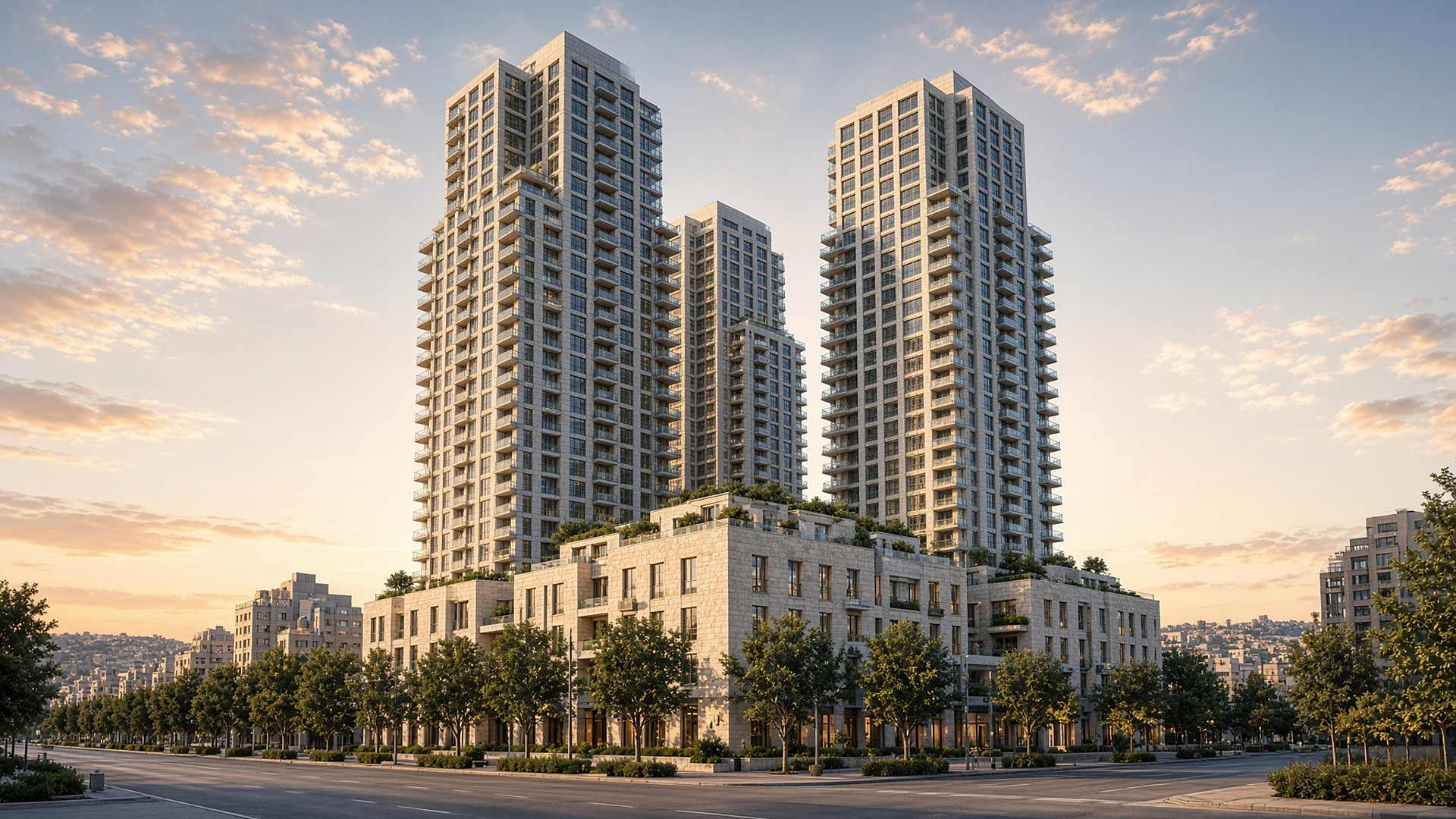
    Featured image: AI-generated illustration (Grok Imagine). It is an illustration, not a photograph of the site or a rendering of the approved design.

    Sources

    1. ice.co.il — The giant urban-renewal plan: 950 new apartments, 200 for rent (Itzik Yitzhaki, 6 Sept. 2026, Hebrew)
    2. Nadlan Center — Three towers of more than 40 storeys in the heart of Jerusalem: Hasbon compound plan approved (6 Sept. 2026, Hebrew)
    3. Magdilim — After the objections: the changes in Jerusalem’s Hasbon compound (7 Sept. 2026, Hebrew)
    4. The Jerusalem Post — Jerusalem light rail expands with new L3 route (Shir Perets, 29 Aug. 2026)
    5. Globes — Jerusalem city engineer at the Israel Real Estate Conference (Nevo Shapir, 7 Sept. 2026, Hebrew)

  • Old City Apartment Facing the Western Wall Listed at ₪50 Million Asking Price; No Sale Reported

    Old City Apartment Facing the Western Wall Listed at ₪50 Million Asking Price; No Sale Reported

    By David Nataf
    26 September 2026 — Jerusalem

    Jerusalem — A 240-square-metre apartment in the Old City’s Jewish Quarter, designed by architect Moshe Safdie and overlooking the Western Wall, has been put up for sale with an asking price of about ₪50 million, TheMarker reported on 31 August 2026. The figure is an asking price, not a completed sale: no buyer has been reported. Earlier attempts to sell the property at close to ₪100 million did not lead to a deal, according to the report.

    Key facts

    • What: a 240 m² apartment facing the Western Wall plaza, designed by Moshe Safdie, built in 1973 (TheMarker).
    • Status: offered for sale at about ₪50 million — an asking price; no transaction has been reported.
    • Per square metre: about ₪208,000/m² at the asking price (Emess calculation).
    • Previous attempts: marketed in recent years at close to ₪100 million, without a sale (TheMarker; Emess).
    • Recent closed deals nearby, outside the walls: ₪66.3 million for 510 m² in Kfar David, March 2026 (Globes); about ₪100 million before VAT for some 800 m² in Mamilla, completed end of March 2026 (TheMarker).

    The listing

    According to TheMarker, the apartment is in one of the buildings erected near the Western Wall plaza after 1967. It was designed by Safdie, completed in 1973 and bought five years later by a Jewish soldier serving with the US Army in Jerusalem, who paid what the paper described as “hundreds of thousands of dollars.” The Western Wall can be seen from all of its windows, the report said.

    The owner, now 91, has decided to sell and pass the proceeds on to the next generations of his family, the Haredi news site Emess reported on the same day, citing TheMarker. At ₪50 million, the asking price works out at roughly ₪208,000 per square metre, Emess calculated. A listing article published on 30 August by the site HaMechadesh, marked as sponsored content, said the apartment had been advertised on the commercial real-estate listings site Menivim at the same price.

    An asking price reflects what a seller hopes to obtain. Whether a buyer will pay it — or how far the price might move in negotiation — is not known. The owner’s earlier attempts at close to ₪100 million did not produce a deal.

    What recent sales near the Old City show

    Closed transactions reported in the Israeli press this year were concluded just outside the Old City walls, in the Mamilla area, rather than inside the Jewish Quarter:

    • Kfar David (March 2026). Developers Damri and Bumel Israel sold a 510 m² apartment with a 60 m² balcony, an attached roof and an open view of the Old City walls for ₪66.3 million, and a second, 386 m² apartment in the same building — without the wall view — to the same buyer for ₪25 million, Globes reported on 15 April 2026. Both were sold as bare shells. Prices in the project ranged from about ₪54,000 to ₪120,000 per square metre, with the floor, and therefore the view of the walls, the main factor, according to Globes; most buyers in the project were wealthy foreign residents.
    • Mamilla (end of March 2026). Alrov Real Estate and Hotels completed the sale of a shell space of about 800 m² in the Mamilla complex overlooking the Old City walls and the Temple Mount, TheMarker reported on 20 May 2026. The price was about ₪100 million before VAT, according to TheMarker’s report as cited by other Israeli outlets; it was described as the last apartment sold in the project.

    On those figures, the Kfar David and Mamilla deals were concluded well below the per-square-metre level implied by the Jewish Quarter asking price. Emess wrote that exceptionally luxurious properties in Jerusalem “may sell” at around ₪100,000–150,000 per square metre, depending on location and specification. The comparison has limits: the Old City listing is a finished, decades-old apartment inside the walls, while the Mamilla and Kfar David units were new shells outside them.

    A thin and unusual market

    Private apartments with a direct view of the Western Wall rarely come onto the open market, and publicly reported transactions inside the Old City are few, which makes any single price difficult to benchmark. The Old City lies in East Jerusalem, which Israel captured from Jordan in 1967 and later annexed; the annexation is not recognised by most of the international community, and Palestinians seek East Jerusalem as the capital of a future state. The status of property in the Old City is politically sensitive and has been the subject of legal disputes.

    Related: Jerusalem sale prices by neighborhood · Jerusalem hub

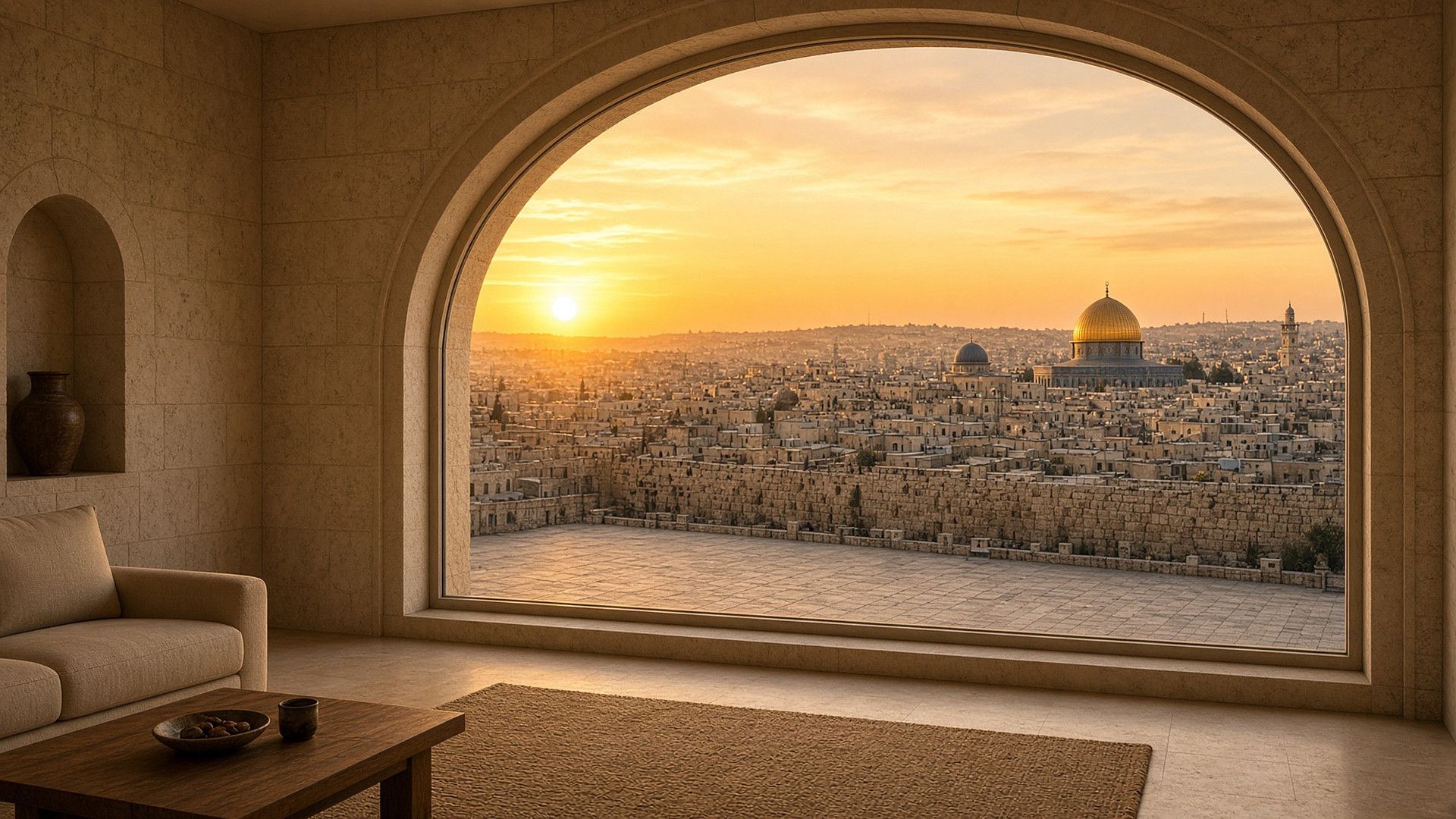
    Featured image: AI-generated illustration (Grok Imagine). It is an illustration, not a photograph of the apartment or of the actual view.

    Sources

    1. TheMarker — At 91 he decided to sell and cut the price: the rare apartment facing the Western Wall is offered for ₪50 million (Simi Spolter, 31 Aug. 2026, Hebrew)
    2. Emess — Who will pay ₪50 million to wake up facing the Western Wall (Gadi Fuchs, 31 Aug. 2026, Hebrew)
    3. HaMechadesh — Apartment facing the Western Wall offered for ₪50 million (30 Aug. 2026, Hebrew; marked as sponsored content)
    4. Globes — More than ₪90 million: the unusual real-estate deal facing Jerusalem’s walls (Arik Mirovsky, 15 Apr. 2026, Hebrew)
    5. TheMarker — Akirov sold an 800 m² apartment in Mamilla for ₪100 million (20 May 2026, Hebrew)

  • Jerusalem’s Green Line Opens Its First Leg, HaTurim–Malha; Gilo Section Due in December

    Jerusalem’s Green Line Opens Its First Leg, HaTurim–Malha; Gilo Section Due in December

    By David Nataf
    26 September 2026 — Jerusalem

    Jerusalem — Five weeks after it opened, the first section of Jerusalem’s Green Line — designated L3 — runs about 7 kilometres from HaTurim, near the Mahane Yehuda market, to Malha in the south of the city, with 13 stations, 12 of them new, and trains every eight minutes at peak times, The Jerusalem Post reported when service began on 21 August 2026. The next section, L4 from the Central Bus Station to Gilo, is scheduled for December.

    The route

    From HaTurim, L3 runs west past the Central Bus Station and the Yitzhak Navon railway station, then south to the Knesset and government complex, the International Convention Center, the Hebrew University’s Givat Ram campus and the Botanical Gardens, before stopping at Teddy Stadium and the Pais Arena and ending near Malha Mall and the Gav Yam technology park. It serves the Givat Mordechai, Pat, Gonenim and Malha neighborhoods.

    L3 connects with the Red Line (L1) at two transfer points — HaTurim, and the Central Bus Station / International Convention Center stop behind Navon station — creating what Mayor Moshe Lion called a network rather than a single line. “Jerusalem is moving from a city that has a light rail to a city with a light rail network,” he said. Like the rest of the system, the new line does not run on Shabbat.

    The Red Line, open since 2011 and extended in recent years between Neve Yaakov and Hadassah Ein Kerem, carries about 200,000 riders a day, according to the Post; the full light-rail system could eventually carry up to 400,000 a day.

    What comes next

    • December 2026 — L4, Central Bus Station to Gilo. Gilo is the city’s largest neighborhood, with more than 100,000 residents, and the line is expected to give them faster access to Givat Ram and Navon station.
    • June 2027 — Mount Scopus. The route is scheduled to reach the Hebrew University’s Mount Scopus campus through French Hill and the area near the Israel Police national headquarters, linking the university’s two campuses by rail.
    • End of 2027 — Givat Shaul and Har Nof branch.
    • Blue Line. Already under construction, it is planned to run 24 kilometres from Ramot in the north to Gilo in the south through downtown Jerusalem and Har Hotzvim, with 40 stations. The Post reported on 29 August that it is not projected to open before 2029 or 2030.

    The Green Line is years behind its original schedule. Citing Globes, the Post reported that L3 opened ten years later than planned, when earlier projections had the whole line completed by 2025; the rounds of fighting with Iran added further delays. Residents along the route, including in Givat Mordechai, Pat and on Jaffa Road, lived with years of works and detours.

    Rail and the housing map

    Rail is also shaping where the city plans to add homes. At the Globes Israel Real Estate Conference on 7 September, City Engineer Yoel Even said taller construction is concentrated in urban-renewal areas and employment hubs, including the city entrance, where it can rely on mass-transit systems, while historic neighborhoods keep lower-rise rules.

    Heavy rail is part of the picture too. The Benin complex — about 10 dunams between Jaffa Road, HaNevi’im Street and Raoul Wallenberg Street — was put up for sale with a starting price of NIS 420 million, Calcalist’s CTech reported on 1 September. Its approved plan allows two residential towers of 29 and 31 storeys with 295 apartments, hotels with about 200 rooms and commercial space. It includes a station on the planned extension of the railway line from Yitzhak Navon station into the city centre and eventually to Khan station; construction work on the station has begun, and bids are due by 3 December.

    Near the New Talpiot project, Globes reported in February that tall towers have been approved along Hebron Road because the light rail will run past there; appraiser Kobi Bir told the paper he expected the area to “change completely” within ten years.

    Related: Jerusalem rent prices by neighborhood · Jerusalem hub

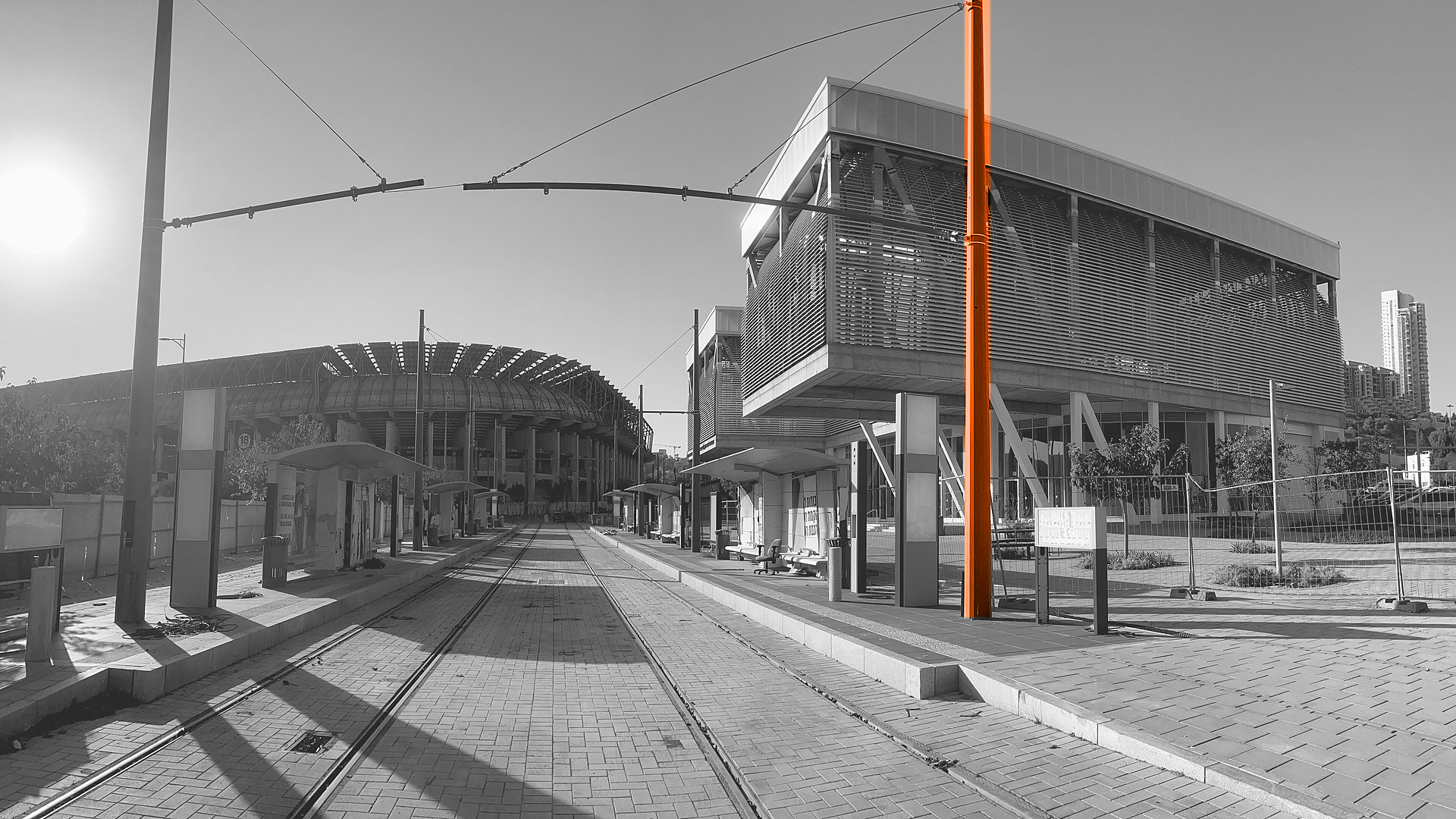
    Featured image: Sports Complex Malha light-rail station, Jerusalem, photographed in November 2025. Photo: Adielbm, CC BY-SA 4.0, via Wikimedia Commons. Converted to black and white with one orange accent by Tel Aviv Apartment; the adapted image is shared under the same licence.

    Sources

    1. The Jerusalem Post — Jerusalem launches second light rail line after Iran war delays (Udi Ezion, Efrat Forsher; 19 Aug. 2026, updated 21 Aug. 2026)
    2. The Jerusalem Post — Jerusalem light rail expands with new L3 route (Shir Perets, 29 Aug. 2026)
    3. CTech by Calcalist — 10 dunams in central Jerusalem hit the market for $140 million (1 Sept. 2026)
    4. Globes — Jerusalem city engineer at the Israel Real Estate Conference (Nevo Shapir, 7 Sept. 2026, Hebrew)
    5. Globes — Foreign resident buys seven Jerusalem apartments (Arik Mirovsky, 22 Feb. 2026)

  • Jerusalem Tops 7,000 Housing Permits for a Fifth Year as 640 Urban-Renewal Units Win Approval

    Jerusalem Tops 7,000 Housing Permits for a Fifth Year as 640 Urban-Renewal Units Win Approval

    By David Nataf
    26 September 2026 — Jerusalem

    Jerusalem — Jerusalem has issued building permits for more than 7,000 housing units for the fifth consecutive year, City Engineer Yoel Even told the Globes Israel Real Estate Conference on 7 September 2026, with about 4,000 of the past year’s units in urban-renewal projects. On 24 September, the planning news site Magdilim reported that the Jerusalem District Planning Committee had approved three pinui-binui (evacuate-and-rebuild) plans with some 640 new homes in Kiryat Menachem, Rasko and Beit HaKerem.

    Five years above 7,000 permits

    According to figures compiled by the Israeli real-estate site isrealestate.co.il from Globes and the Jerusalem Municipality, the city issued permits for 7,701 housing units in 2024, of which 3,044 were in urban-renewal projects, and a record 8,445 units in 2025, of which 4,092 were renewal units — almost half of the total. Until 2019, the city averaged about 2,500 permitted units a year; over the past five years it has permitted more than 36,000.

    Urban-renewal processes are under way in 31 Jerusalem neighborhoods, the same report said, with the most active including Kiryat Yovel, Gilo, Armon HaNatziv, Kiryat Menachem, Gonenim and Talpiot.

    Even attributed the pace to a change of method at City Hall, from waiting for developers to chasing projects. “There is no developer who doesn’t know my personal phone number,” he said, according to Globes. “I have whole teams that really push — not passive but active — who call developers and ask why things aren’t moving.”

    Towers, but not everywhere

    Even rejected the claim that the municipality mainly promotes towers. A municipal review found that 58% of planned housing units were in buildings of up to ten floors and about 70% in buildings of up to 21 floors, he said. Height, in his account, is a tool to protect open land: “We cancelled entire projects that wanted to break into Jerusalem’s forests and trample them,” he told the conference (Globes, translated from Hebrew). Lower-rise rules are kept in historic neighborhoods such as Rehavia and Talbiyeh, while taller buildings are concentrated in renewal areas and employment hubs, including the city entrance, where they can rely on mass transit.

    Even also said more than 3,000 hotel rooms are under construction in the city, that occupancy in Jerusalem’s employment space stands at about 95%, and that 81% of employed Jerusalem residents work inside the city.

    Three renewal plans approved — about 640 homes

    The District Planning Committee’s latest decisions, as reported by Magdilim on 24 September 2026:

    • Kiryat Menachem — Iceland Street 19–21 and Colombia Street 16. A 7-dunam plan by Azorim replaces three four-storey residential buildings with 74 apartments by 289 new units in two 28-storey towers and a 10-storey building. The plan was deposited in May and drew two objections, one of them a technical objection by the developer itself.
    • Rasko — corner of Tchernichovsky and Dov Kimchi streets. On 3.3 dunams, the plan by Odor Urban Renewal replaces three buildings with 42 apartments by three new buildings with 130 units. It was first submitted nine years ago, deposited in 2019 and drew 53 objections; the committee approved a version with two 11-storey buildings facing Tchernichovsky Street and an 8-storey building measured from HaTayasim Street.
    • Beit HaKerem — HaTomer Street 8–10. On about 4.5 dunams, the plan by Beit Yerushalmi (BY) replaces two four-storey housing blocks with about 70 apartments by two towers of 28 and 30 storeys with 222 units, links HaTomer and Smadar streets and preserves and enlarges the adjacent HaTomer garden. It drew 64 objections and was approved after a second round.

    Together the three plans add up to 641 units (289 + 130 + 222), reported as 640. In its HaTomer decision, the committee said the plan makes a significant contribution to the city’s housing supply by realising the renewal potential of old buildings “that no longer meet adequate standards,” without encroaching on additional open space (Magdilim, translated from Hebrew).

    A permit is not a completed apartment

    The figures describe permission to build, not homes delivered. Several years can pass between a permit, the start of construction and occupancy, and pinui-binui projects also depend on financing, bank backing, the availability of workers and agreements with existing owners, isrealestate.co.il noted. A larger pipeline therefore does not translate automatically into lower prices; its effect depends on how quickly projects actually break ground.

    For residents of the neighborhoods concerned, renewal also means years of construction, changing traffic patterns and higher density, alongside the new infrastructure, safe rooms and elevators that replacement buildings bring.

    Related: Jerusalem sale prices by neighborhood · Jerusalem hub

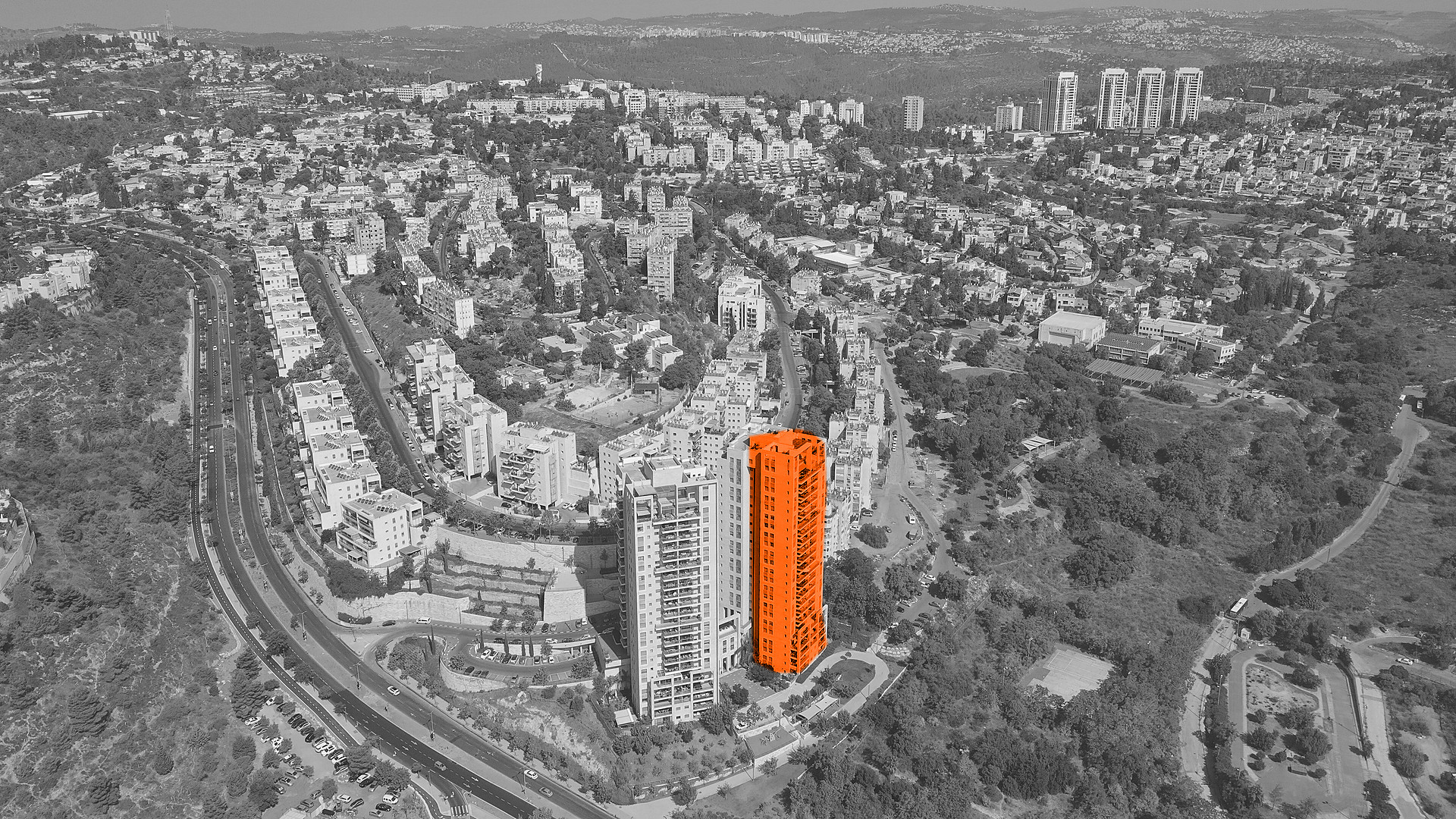
    Featured image: Kiryat Menachem and Kiryat Yovel, Jerusalem, from the air. Photo: Chezki Mozes, CC BY-SA 4.0, via Wikimedia Commons. Converted to black and white with one orange accent by Tel Aviv Apartment; the adapted image is shared under the same licence.

    Sources

    1. Globes — Jerusalem city engineer: “We crossed the 7,000-unit mark in building permits” (Nevo Shapir, 7 Sept. 2026, Hebrew)
    2. isrealestate.co.il — Jerusalem issues permits for more than 7,000 apartments for the fifth consecutive year (9 Sept. 2026; sources: Globes, Jerusalem Municipality)
    3. Magdilim — District committee approves 640 apartments in three pinui-binui plans in Jerusalem (Ziv Goldfisher, 24 Sept. 2026, Hebrew)

  • Jerusalem Home Prices Slip 0.4% in June–July; Resale Index Falls 2.9% in Q2, CBS Says

    Jerusalem Home Prices Slip 0.4% in June–July; Resale Index Falls 2.9% in Q2, CBS Says

    By David Nataf
    26 September 2026 — Jerusalem

    Jerusalem — Home prices in the Jerusalem district fell 0.4% in June–July 2026 compared with May–June, while the national index edged up 0.2%, according to the Central Bureau of Statistics (CBS) release published on 15 September 2026. Year on year, Jerusalem was still 1.1% higher, one of only two districts in positive territory. A new CBS quarterly index of second-hand homes recorded its steepest decline in Jerusalem: −2.9% in the second quarter of 2026 compared with the first.

    What the CBS measured

    The CBS Home Price Index compares quality-adjusted transaction prices over rolling two-month periods, using deals reported to the Israel Tax Authority. The latest reading covers June–July 2026. The bureau describes the figure as provisional, because some deals signed in the period have not yet been reported.

    • Israel: +0.2% versus May–June; −1.2% versus June–July 2025.
    • Jerusalem district: −0.4% versus May–June; +1.1% year on year.
    • Tel Aviv district: +0.7%; −0.9% year on year.
    • Central district: +0.3%; −3.2% year on year.
    • Haifa: −0.3% (−2.4% year on year). North: −0.1% (+1.0%). South: +0.1% (−0.6%).

    The district figures above are those of CBS release 292/2026 as reported by Israel National News and by the real-estate site Klika on 15 September. Globes, reporting the same release on 16 September, rounded Jerusalem’s annual change to 1%.

    A new resale index — and Jerusalem leads the decline

    With this release the CBS began publishing a separate quarterly index of second-hand home prices. According to Globes, it is published with a one-month delay so that the bureau can collect most of the quarter’s transactions from the Tax Authority. Nationally, resale prices fell 1.2% in the second quarter of 2026 compared with the first. Jerusalem fell 2.9%, Tel Aviv 2.0% and the Central district 1.1%, while the South (+0.3%), the North (+0.1%) and Haifa (+0.1%) posted small gains.

    Globes noted that Jerusalem was the only district where second-hand homes fell faster than the district’s overall index in the quarter: the general index there declined 2.3% between the first and second quarters, against 2.9% for resale homes alone. Klika, citing the CBS release, reported that the resale index will now appear once a quarter — in March, June, September and December — to ensure a large enough number of transactions per district.

    The recent path of Jerusalem prices

    The June–July dip follows a volatile spring. In February–March 2026, Jerusalem district prices rose 0.4% and stood 4.2% above a year earlier, according to CBS figures reported by The Times of Israel. In March–April they fell 2.0% while remaining 1.7% higher year on year. In the May–June release, Jerusalem was among the districts that rose, Klika noted — before turning down again in June–July. Over those readings, the district’s annual gain narrowed from 4.2% to 1.1%.

    Transaction-level data point in the same direction. WizBid, which aggregates deals reported to the Tax Authority, showed a two-year median of ₪34,756 per square metre across 12,180 Jerusalem apartment sales when consulted on 26 September 2026, with the median price per square metre down about 1.8% over the latest 12 months against the previous 12 (₪34,375 versus ₪35,000).

    Rents keep moving the other way

    Rents have not followed purchase prices. The CBS Housing Services Index, which includes rents, rose 0.7% between July and August and 3.6% over the 12 months to August 2026, against 1.5% for the overall Consumer Price Index (Globes). Tenants renewing a lease saw average increases of about 2.6%, and 4.4% where a new tenant replaced the previous one (Israel National News, citing the CBS). These rent figures are national.

    In Jerusalem listings, Yad2 data published by Globes on 13 August showed average asking rents for three-room apartments in Beit HaKerem and Ramat Beit HaKerem at ₪6,524 a month in July 2026, up 17% from ₪5,576 a year earlier — the steepest annual rise among the neighborhoods Yad2 examined. Three-room asking rents in central Jerusalem rose 10.4%, or ₪745 a month, over the same period.

    What the numbers do and do not say

    • Provisional data. Two-month district changes are small and can reverse: Klika pointed out that the district picture in this release was almost the mirror image of the previous one.
    • District, not street. The index covers the whole Jerusalem district and is quality-adjusted; neighborhoods such as Rehavia and Pisgat Zeev can move differently.
    • New versus second-hand. Nationally, new-home prices rose 0.5% in June–July (0.4% excluding government-subsidised deals), and subsidised deals made up 41.2% of new-home transactions, up from 37.8% in May–June (Klika, citing the CBS).

    Related data: neighborhood figures are compiled on our Jerusalem sale prices and Jerusalem rent prices pages.

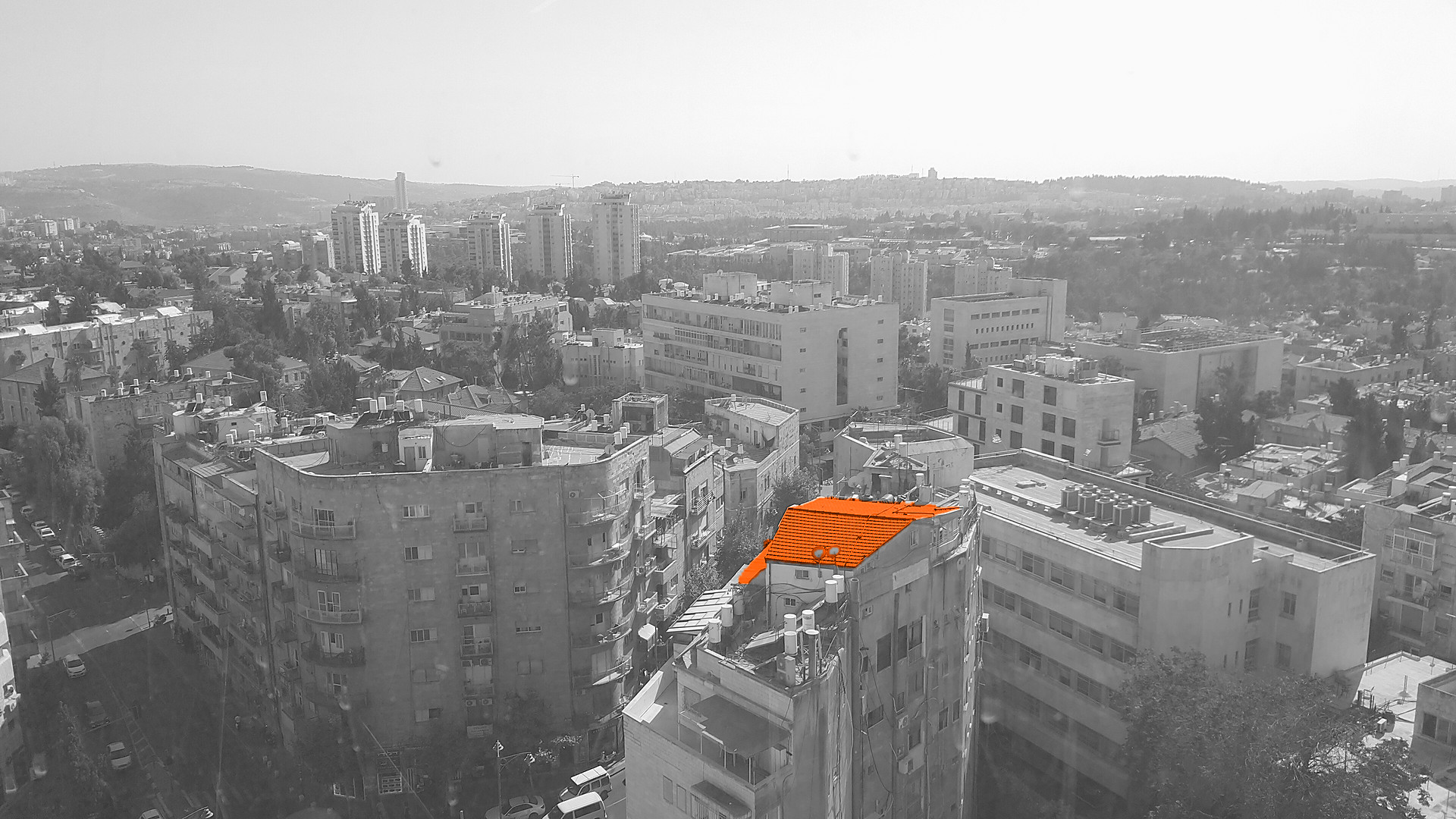
    Featured image: Rehavia seen from the City Tower, Jerusalem. Photo: Yair Liberman, CC BY-SA 4.0, via Wikimedia Commons. Converted to black and white with one orange accent by Tel Aviv Apartment; the adapted image is shared under the same licence.

    Sources

    1. Central Bureau of Statistics — Price changes in the dwellings market, release 292/2026 (15 Sept. 2026, Hebrew PDF)
    2. Globes — While home prices waver, rents are moving strongly upwards (16 Sept. 2026)
    3. Israel National News — Prices keep rising: what got more expensive, and what got cheaper? (15 Sept. 2026)
    4. Klika — Home price index June–July 2026, district table from CBS release 292/2026 (15 Sept. 2026, Hebrew)
    5. The Times of Israel — Housing snapshot May 2026 (February–March CBS data)
    6. The Times of Israel — Housing snapshot July 2026 (March–April CBS data)
    7. Globes — Yad2 data: the neighborhoods where rents jumped most (13 Aug. 2026, Hebrew)
    8. WizBid — Jerusalem apartment deals from Tax Authority records (consulted 26 Sept. 2026, Hebrew)

EN|FR