By David Nataf
26 September 2026 — Jerusalem
Jerusalem — Five weeks after it opened, the first section of Jerusalem’s Green Line — designated L3 — runs about 7 kilometres from HaTurim, near the Mahane Yehuda market, to Malha in the south of the city, with 13 stations, 12 of them new, and trains every eight minutes at peak times, The Jerusalem Post reported when service began on 21 August 2026. The next section, L4 from the Central Bus Station to Gilo, is scheduled for December.
The route
From HaTurim, L3 runs west past the Central Bus Station and the Yitzhak Navon railway station, then south to the Knesset and government complex, the International Convention Center, the Hebrew University’s Givat Ram campus and the Botanical Gardens, before stopping at Teddy Stadium and the Pais Arena and ending near Malha Mall and the Gav Yam technology park. It serves the Givat Mordechai, Pat, Gonenim and Malha neighborhoods.
L3 connects with the Red Line (L1) at two transfer points — HaTurim, and the Central Bus Station / International Convention Center stop behind Navon station — creating what Mayor Moshe Lion called a network rather than a single line. “Jerusalem is moving from a city that has a light rail to a city with a light rail network,” he said. Like the rest of the system, the new line does not run on Shabbat.
The Red Line, open since 2011 and extended in recent years between Neve Yaakov and Hadassah Ein Kerem, carries about 200,000 riders a day, according to the Post; the full light-rail system could eventually carry up to 400,000 a day.
What comes next
- December 2026 — L4, Central Bus Station to Gilo. Gilo is the city’s largest neighborhood, with more than 100,000 residents, and the line is expected to give them faster access to Givat Ram and Navon station.
- June 2027 — Mount Scopus. The route is scheduled to reach the Hebrew University’s Mount Scopus campus through French Hill and the area near the Israel Police national headquarters, linking the university’s two campuses by rail.
- End of 2027 — Givat Shaul and Har Nof branch.
- Blue Line. Already under construction, it is planned to run 24 kilometres from Ramot in the north to Gilo in the south through downtown Jerusalem and Har Hotzvim, with 40 stations. The Post reported on 29 August that it is not projected to open before 2029 or 2030.
The Green Line is years behind its original schedule. Citing Globes, the Post reported that L3 opened ten years later than planned, when earlier projections had the whole line completed by 2025; the rounds of fighting with Iran added further delays. Residents along the route, including in Givat Mordechai, Pat and on Jaffa Road, lived with years of works and detours.
Rail and the housing map
Rail is also shaping where the city plans to add homes. At the Globes Israel Real Estate Conference on 7 September, City Engineer Yoel Even said taller construction is concentrated in urban-renewal areas and employment hubs, including the city entrance, where it can rely on mass-transit systems, while historic neighborhoods keep lower-rise rules.
Heavy rail is part of the picture too. The Benin complex — about 10 dunams between Jaffa Road, HaNevi’im Street and Raoul Wallenberg Street — was put up for sale with a starting price of NIS 420 million, Calcalist’s CTech reported on 1 September. Its approved plan allows two residential towers of 29 and 31 storeys with 295 apartments, hotels with about 200 rooms and commercial space. It includes a station on the planned extension of the railway line from Yitzhak Navon station into the city centre and eventually to Khan station; construction work on the station has begun, and bids are due by 3 December.
Near the New Talpiot project, Globes reported in February that tall towers have been approved along Hebron Road because the light rail will run past there; appraiser Kobi Bir told the paper he expected the area to “change completely” within ten years.
Related: Jerusalem rent prices by neighborhood · Jerusalem hub
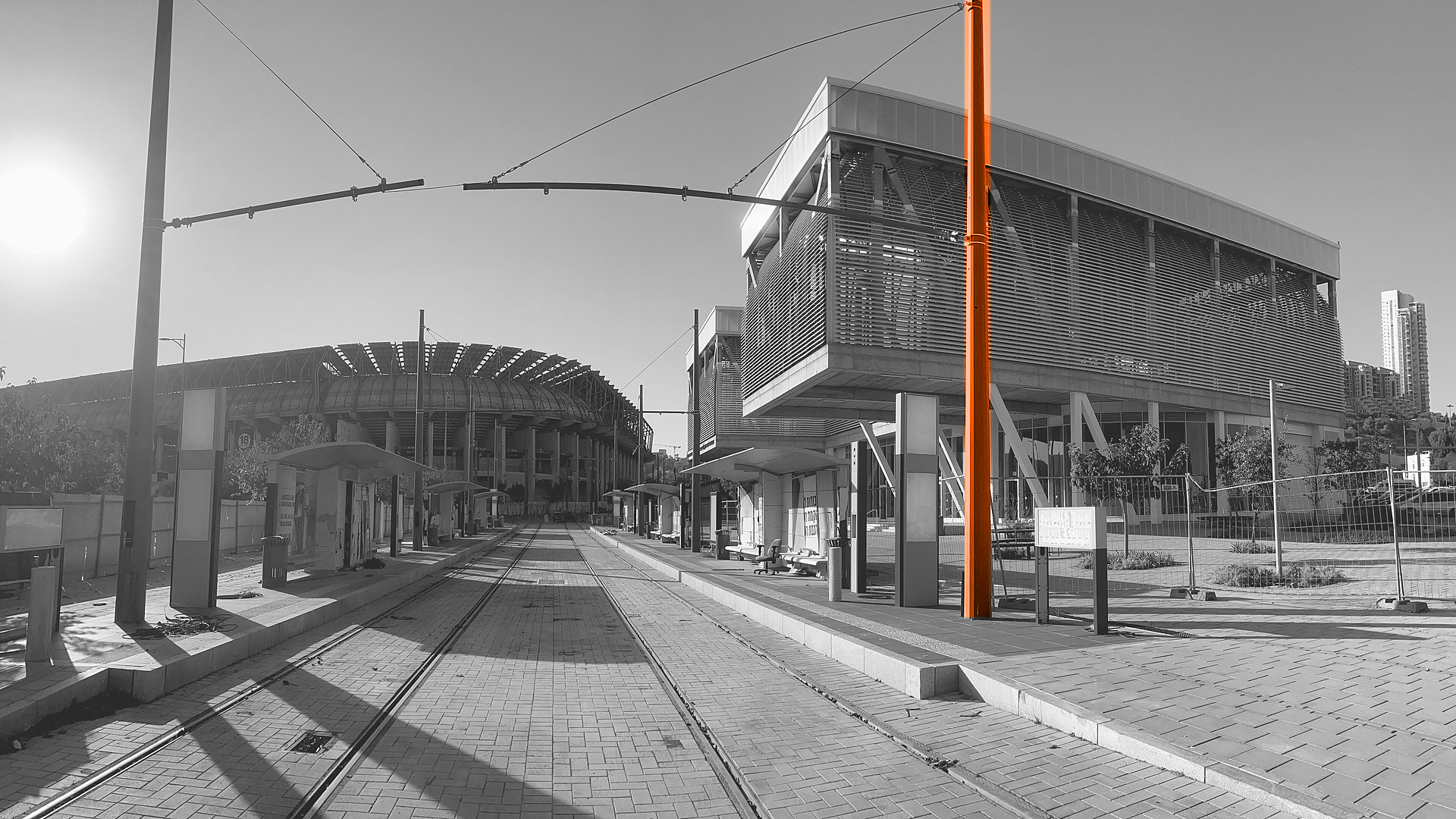
Featured image: Sports Complex Malha light-rail station, Jerusalem, photographed in November 2025. Photo: Adielbm, CC BY-SA 4.0, via Wikimedia Commons. Converted to black and white with one orange accent by Tel Aviv Apartment; the adapted image is shared under the same licence.
Sources
- The Jerusalem Post — Jerusalem launches second light rail line after Iran war delays (Udi Ezion, Efrat Forsher; 19 Aug. 2026, updated 21 Aug. 2026)
- The Jerusalem Post — Jerusalem light rail expands with new L3 route (Shir Perets, 29 Aug. 2026)
- CTech by Calcalist — 10 dunams in central Jerusalem hit the market for $140 million (1 Sept. 2026)
- Globes — Jerusalem city engineer at the Israel Real Estate Conference (Nevo Shapir, 7 Sept. 2026, Hebrew)
- Globes — Foreign resident buys seven Jerusalem apartments (Arik Mirovsky, 22 Feb. 2026)
Leave a Reply