האחדות
The Unity
Shchunat Ezrat Yisrael, Yerushalayim · Since 1910
Tel Aviv Apartment

Tel Aviv Apartment

Author: David Nataf

  • Jerusalem Tops 7,000 Housing Permits for a Fifth Year as 640 Urban-Renewal Units Win Approval

    Jerusalem Tops 7,000 Housing Permits for a Fifth Year as 640 Urban-Renewal Units Win Approval

    By David Nataf
    26 September 2026 — Jerusalem

    Jerusalem — Jerusalem has issued building permits for more than 7,000 housing units for the fifth consecutive year, City Engineer Yoel Even told the Globes Israel Real Estate Conference on 7 September 2026, with about 4,000 of the past year’s units in urban-renewal projects. On 24 September, the planning news site Magdilim reported that the Jerusalem District Planning Committee had approved three pinui-binui (evacuate-and-rebuild) plans with some 640 new homes in Kiryat Menachem, Rasko and Beit HaKerem.

    Five years above 7,000 permits

    According to figures compiled by the Israeli real-estate site isrealestate.co.il from Globes and the Jerusalem Municipality, the city issued permits for 7,701 housing units in 2024, of which 3,044 were in urban-renewal projects, and a record 8,445 units in 2025, of which 4,092 were renewal units — almost half of the total. Until 2019, the city averaged about 2,500 permitted units a year; over the past five years it has permitted more than 36,000.

    Urban-renewal processes are under way in 31 Jerusalem neighborhoods, the same report said, with the most active including Kiryat Yovel, Gilo, Armon HaNatziv, Kiryat Menachem, Gonenim and Talpiot.

    Even attributed the pace to a change of method at City Hall, from waiting for developers to chasing projects. “There is no developer who doesn’t know my personal phone number,” he said, according to Globes. “I have whole teams that really push — not passive but active — who call developers and ask why things aren’t moving.”

    Towers, but not everywhere

    Even rejected the claim that the municipality mainly promotes towers. A municipal review found that 58% of planned housing units were in buildings of up to ten floors and about 70% in buildings of up to 21 floors, he said. Height, in his account, is a tool to protect open land: “We cancelled entire projects that wanted to break into Jerusalem’s forests and trample them,” he told the conference (Globes, translated from Hebrew). Lower-rise rules are kept in historic neighborhoods such as Rehavia and Talbiyeh, while taller buildings are concentrated in renewal areas and employment hubs, including the city entrance, where they can rely on mass transit.

    Even also said more than 3,000 hotel rooms are under construction in the city, that occupancy in Jerusalem’s employment space stands at about 95%, and that 81% of employed Jerusalem residents work inside the city.

    Three renewal plans approved — about 640 homes

    The District Planning Committee’s latest decisions, as reported by Magdilim on 24 September 2026:

    • Kiryat Menachem — Iceland Street 19–21 and Colombia Street 16. A 7-dunam plan by Azorim replaces three four-storey residential buildings with 74 apartments by 289 new units in two 28-storey towers and a 10-storey building. The plan was deposited in May and drew two objections, one of them a technical objection by the developer itself.
    • Rasko — corner of Tchernichovsky and Dov Kimchi streets. On 3.3 dunams, the plan by Odor Urban Renewal replaces three buildings with 42 apartments by three new buildings with 130 units. It was first submitted nine years ago, deposited in 2019 and drew 53 objections; the committee approved a version with two 11-storey buildings facing Tchernichovsky Street and an 8-storey building measured from HaTayasim Street.
    • Beit HaKerem — HaTomer Street 8–10. On about 4.5 dunams, the plan by Beit Yerushalmi (BY) replaces two four-storey housing blocks with about 70 apartments by two towers of 28 and 30 storeys with 222 units, links HaTomer and Smadar streets and preserves and enlarges the adjacent HaTomer garden. It drew 64 objections and was approved after a second round.

    Together the three plans add up to 641 units (289 + 130 + 222), reported as 640. In its HaTomer decision, the committee said the plan makes a significant contribution to the city’s housing supply by realising the renewal potential of old buildings “that no longer meet adequate standards,” without encroaching on additional open space (Magdilim, translated from Hebrew).

    A permit is not a completed apartment

    The figures describe permission to build, not homes delivered. Several years can pass between a permit, the start of construction and occupancy, and pinui-binui projects also depend on financing, bank backing, the availability of workers and agreements with existing owners, isrealestate.co.il noted. A larger pipeline therefore does not translate automatically into lower prices; its effect depends on how quickly projects actually break ground.

    For residents of the neighborhoods concerned, renewal also means years of construction, changing traffic patterns and higher density, alongside the new infrastructure, safe rooms and elevators that replacement buildings bring.

    Related: Jerusalem sale prices by neighborhood · Jerusalem hub

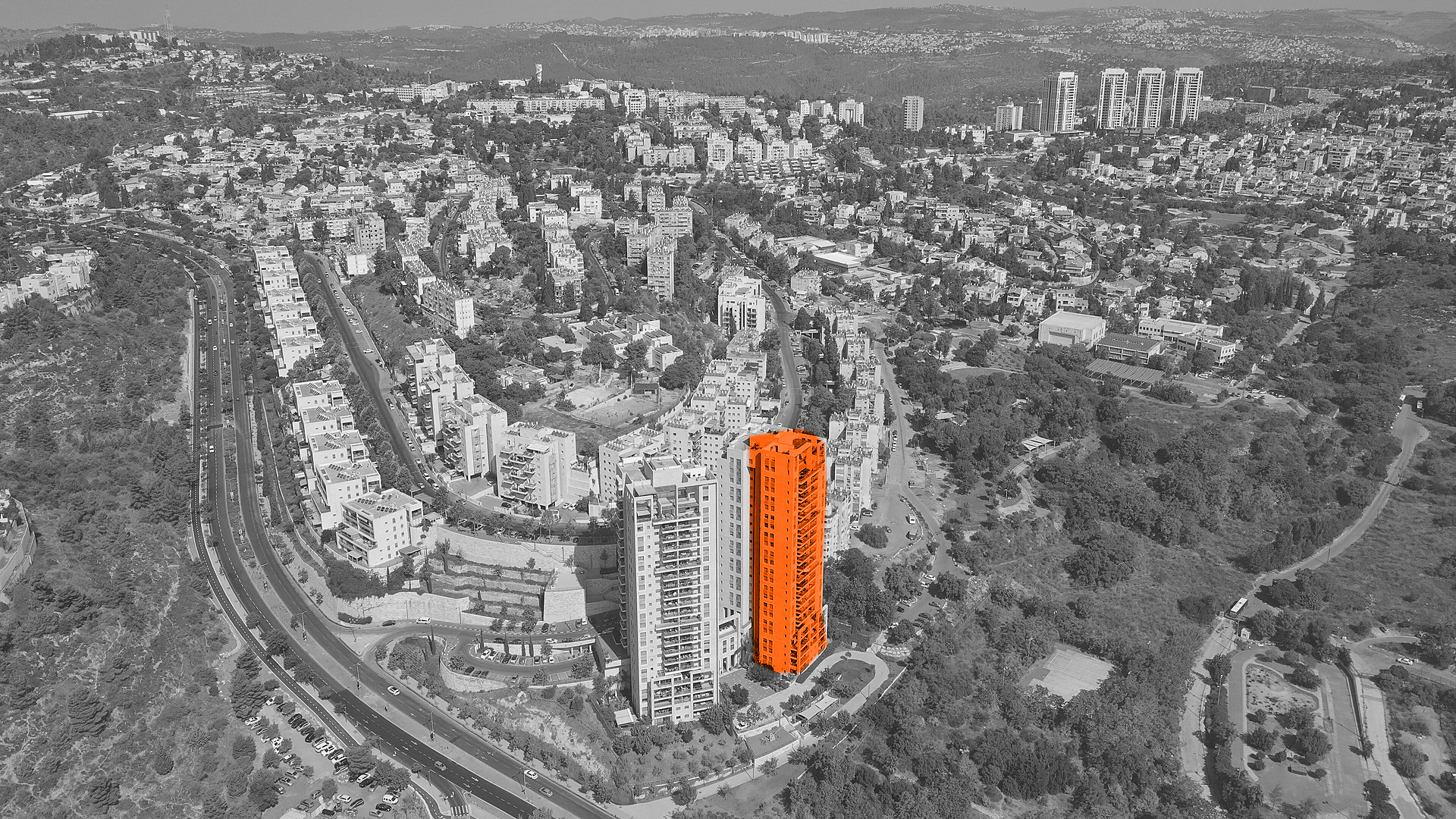
    Featured image: Kiryat Menachem and Kiryat Yovel, Jerusalem, from the air. Photo: Chezki Mozes, CC BY-SA 4.0, via Wikimedia Commons. Converted to black and white with one orange accent by Tel Aviv Apartment; the adapted image is shared under the same licence.

    Sources

    1. Globes — Jerusalem city engineer: “We crossed the 7,000-unit mark in building permits” (Nevo Shapir, 7 Sept. 2026, Hebrew)
    2. isrealestate.co.il — Jerusalem issues permits for more than 7,000 apartments for the fifth consecutive year (9 Sept. 2026; sources: Globes, Jerusalem Municipality)
    3. Magdilim — District committee approves 640 apartments in three pinui-binui plans in Jerusalem (Ziv Goldfisher, 24 Sept. 2026, Hebrew)

  • Jerusalem Home Prices Slip 0.4% in June–July; Resale Index Falls 2.9% in Q2, CBS Says

    Jerusalem Home Prices Slip 0.4% in June–July; Resale Index Falls 2.9% in Q2, CBS Says

    By David Nataf
    26 September 2026 — Jerusalem

    Jerusalem — Home prices in the Jerusalem district fell 0.4% in June–July 2026 compared with May–June, while the national index edged up 0.2%, according to the Central Bureau of Statistics (CBS) release published on 15 September 2026. Year on year, Jerusalem was still 1.1% higher, one of only two districts in positive territory. A new CBS quarterly index of second-hand homes recorded its steepest decline in Jerusalem: −2.9% in the second quarter of 2026 compared with the first.

    What the CBS measured

    The CBS Home Price Index compares quality-adjusted transaction prices over rolling two-month periods, using deals reported to the Israel Tax Authority. The latest reading covers June–July 2026. The bureau describes the figure as provisional, because some deals signed in the period have not yet been reported.

    • Israel: +0.2% versus May–June; −1.2% versus June–July 2025.
    • Jerusalem district: −0.4% versus May–June; +1.1% year on year.
    • Tel Aviv district: +0.7%; −0.9% year on year.
    • Central district: +0.3%; −3.2% year on year.
    • Haifa: −0.3% (−2.4% year on year). North: −0.1% (+1.0%). South: +0.1% (−0.6%).

    The district figures above are those of CBS release 292/2026 as reported by Israel National News and by the real-estate site Klika on 15 September. Globes, reporting the same release on 16 September, rounded Jerusalem’s annual change to 1%.

    A new resale index — and Jerusalem leads the decline

    With this release the CBS began publishing a separate quarterly index of second-hand home prices. According to Globes, it is published with a one-month delay so that the bureau can collect most of the quarter’s transactions from the Tax Authority. Nationally, resale prices fell 1.2% in the second quarter of 2026 compared with the first. Jerusalem fell 2.9%, Tel Aviv 2.0% and the Central district 1.1%, while the South (+0.3%), the North (+0.1%) and Haifa (+0.1%) posted small gains.

    Globes noted that Jerusalem was the only district where second-hand homes fell faster than the district’s overall index in the quarter: the general index there declined 2.3% between the first and second quarters, against 2.9% for resale homes alone. Klika, citing the CBS release, reported that the resale index will now appear once a quarter — in March, June, September and December — to ensure a large enough number of transactions per district.

    The recent path of Jerusalem prices

    The June–July dip follows a volatile spring. In February–March 2026, Jerusalem district prices rose 0.4% and stood 4.2% above a year earlier, according to CBS figures reported by The Times of Israel. In March–April they fell 2.0% while remaining 1.7% higher year on year. In the May–June release, Jerusalem was among the districts that rose, Klika noted — before turning down again in June–July. Over those readings, the district’s annual gain narrowed from 4.2% to 1.1%.

    Transaction-level data point in the same direction. WizBid, which aggregates deals reported to the Tax Authority, showed a two-year median of ₪34,756 per square metre across 12,180 Jerusalem apartment sales when consulted on 26 September 2026, with the median price per square metre down about 1.8% over the latest 12 months against the previous 12 (₪34,375 versus ₪35,000).

    Rents keep moving the other way

    Rents have not followed purchase prices. The CBS Housing Services Index, which includes rents, rose 0.7% between July and August and 3.6% over the 12 months to August 2026, against 1.5% for the overall Consumer Price Index (Globes). Tenants renewing a lease saw average increases of about 2.6%, and 4.4% where a new tenant replaced the previous one (Israel National News, citing the CBS). These rent figures are national.

    In Jerusalem listings, Yad2 data published by Globes on 13 August showed average asking rents for three-room apartments in Beit HaKerem and Ramat Beit HaKerem at ₪6,524 a month in July 2026, up 17% from ₪5,576 a year earlier — the steepest annual rise among the neighborhoods Yad2 examined. Three-room asking rents in central Jerusalem rose 10.4%, or ₪745 a month, over the same period.

    What the numbers do and do not say

    • Provisional data. Two-month district changes are small and can reverse: Klika pointed out that the district picture in this release was almost the mirror image of the previous one.
    • District, not street. The index covers the whole Jerusalem district and is quality-adjusted; neighborhoods such as Rehavia and Pisgat Zeev can move differently.
    • New versus second-hand. Nationally, new-home prices rose 0.5% in June–July (0.4% excluding government-subsidised deals), and subsidised deals made up 41.2% of new-home transactions, up from 37.8% in May–June (Klika, citing the CBS).

    Related data: neighborhood figures are compiled on our Jerusalem sale prices and Jerusalem rent prices pages.

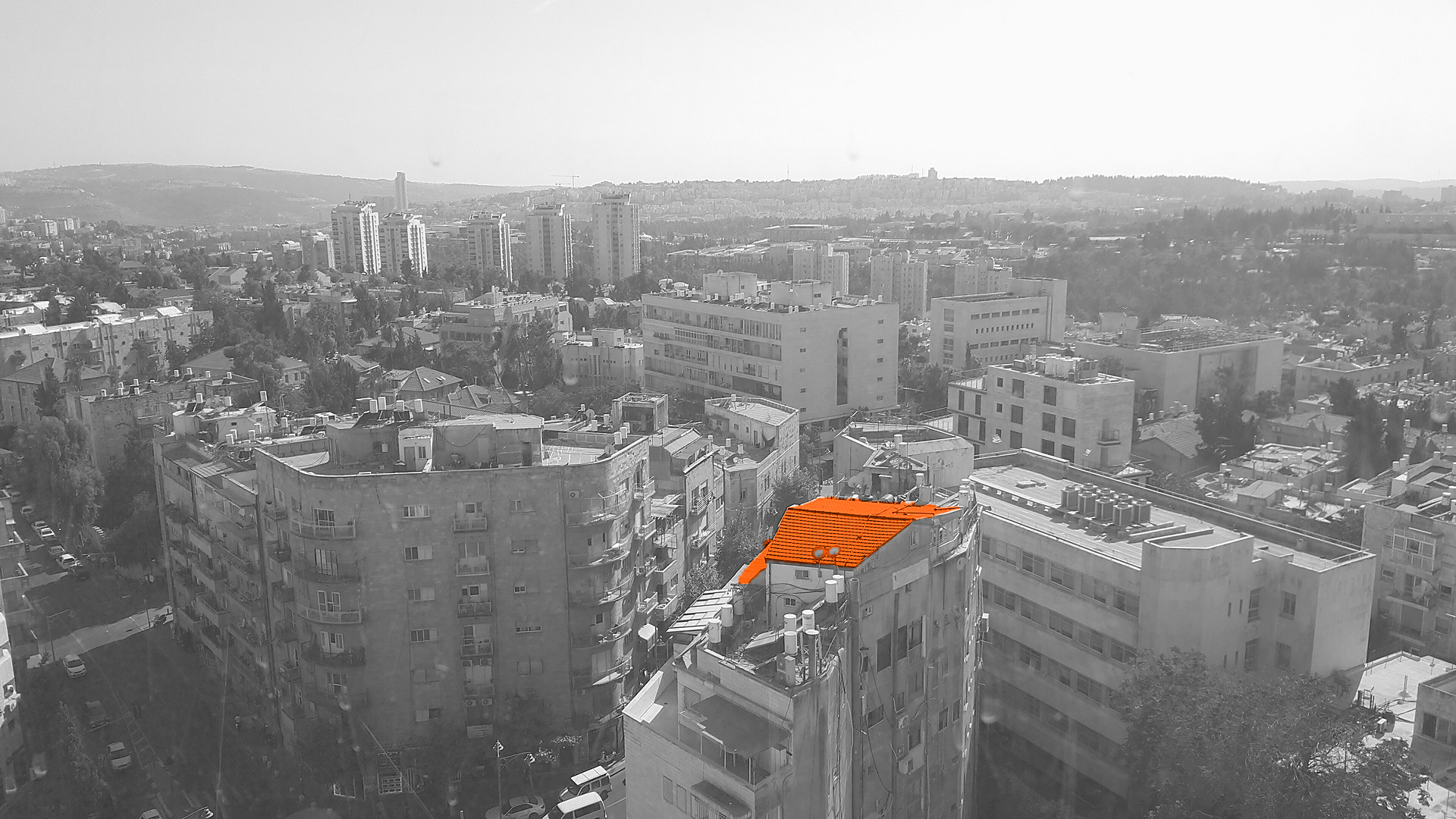
    Featured image: Rehavia seen from the City Tower, Jerusalem. Photo: Yair Liberman, CC BY-SA 4.0, via Wikimedia Commons. Converted to black and white with one orange accent by Tel Aviv Apartment; the adapted image is shared under the same licence.

    Sources

    1. Central Bureau of Statistics — Price changes in the dwellings market, release 292/2026 (15 Sept. 2026, Hebrew PDF)
    2. Globes — While home prices waver, rents are moving strongly upwards (16 Sept. 2026)
    3. Israel National News — Prices keep rising: what got more expensive, and what got cheaper? (15 Sept. 2026)
    4. Klika — Home price index June–July 2026, district table from CBS release 292/2026 (15 Sept. 2026, Hebrew)
    5. The Times of Israel — Housing snapshot May 2026 (February–March CBS data)
    6. The Times of Israel — Housing snapshot July 2026 (March–April CBS data)
    7. Globes — Yad2 data: the neighborhoods where rents jumped most (13 Aug. 2026, Hebrew)
    8. WizBid — Jerusalem apartment deals from Tax Authority records (consulted 26 Sept. 2026, Hebrew)

  • Iran at the UN, Danon’s Rebuke: Tel Aviv Security Read

    Iran at the UN, Danon’s Rebuke: Tel Aviv Security Read

    By David Nataf
    24 September 2026 — Tel Aviv / United Nations

    Tel Aviv — Iranian President Masoud Pezeshkian addressed the UN General Assembly on Wednesday, 23 September 2026, with a defiant wartime line: Iran will not bow, will not bend, and will keep what it calls a peaceful nuclear program (JTA). For anyone living under rocket and proxy threat in Israel, the speech is a security document, not a diplomatic curiosity.

    Hamas, Hezbollah and the Houthis are aggressors backed by Tehran. The IDF defends. JTA’s account of the current war chain starts with Hamas’s October 7, 2023 massacre, Hezbollah’s attack the next day, and Houthi aerial attacks from Yemen — each with Iranian backing, and Iranian personnel involved in Hezbollah’s war on Israel.

    Israel’s UN Ambassador Danny Danon answered Pezeshkian the same day (Israel National News): it was “shameful” that the Iranian president came to the UN to speak against Israel; he should focus on atrocities against Iranians and on “the billions of dollars he is sending to the proxies in the Middle East.” This pack does not invent a roll-call of group names inside Danon’s quote — INN records “proxies” and “billions.” The named Iran–Hamas–Hezbollah–Houthis link is from JTA’s war context, not a fabricated Danon list.

    JTA also reported a U.S. walkout at the start of Pezeshkian’s speech and U.S.–Iran talks on the sidelines without a breakthrough. Netanyahu’s own UN appearance is Thursday, 24 September; France24 expects Iran among the themes. At pack time, a verified full transcript of Netanyahu’s delivered 2026 speech was not yet in hand — so this piece stays on Pezeshkian + Danon + the established proxy axis.

    Tel Aviv takeaway: when Tehran claims victimhood at Turtle Bay while funding the forces that hit Israeli cities and shipping lanes, treat the podium as information warfare. Security policy follows the axis, not the adjectives.

    Sources

    1. JTA — Pezeshkian at UNGA (23 Sept. 2026)
    2. Israel National News — Danon blasts Pezeshkian (23 Sept. 2026)
    3. France 24 — Live: Pezeshkian yesterday / Netanyahu today (24 Sept. 2026)
    4. France 24 — Netanyahu expected themes (24 Sept. 2026)
  • UN Week in New York: Netanyahu, Mamdani and Why NY Antisemitism Matters in Tel Aviv

    UN Week in New York: Netanyahu, Mamdani and Why NY Antisemitism Matters in Tel Aviv

    By David Nataf
    24 September 2026 — Tel Aviv / New York

    Tel Aviv — For Israelis with family in New York, and for expats who still keep a foot in both cities, UN week is not abstract. Prime Minister Benjamin Netanyahu speaks at the General Assembly on Thursday, 24 September 2026. Mayor Zohran Mamdani has spent the same week casting the visit as a morality play about an ICC warrant — a warrant New York cannot enforce and that the United States does not recognize.

    October 7, 2023 remains the starting point: Hamas murdered Israelis; Iran-backed proxies widened the war. The IDF’s job is to defend. Calling that defense “genocide” from City Hall does not make the word true.

    Mamdani told CNN’s Amanpour that Netanyahu is “a war criminal and an architect of a horrific genocide,” while saying the ICC warrant should be “honored” even after he conceded the city lacks arrest authority (JTA; earlier: The Hill, NPR, NY1). Netanyahu’s video reply, carried by JTA and NY1, accused the mayor of supporting “Hamas terrorist monsters” and of “inciting riots against New York Jews,” and promised to “tell the truth” at the UN about Israel’s soldiers and about Mamdani.

    That matters in Tel Aviv because New York is still the largest diaspora hub many Israeli families track. City Council Speaker Julie Menin told NY1 antisemitism is “surging” and asked people to lower the temperature. When a mayor normalizes ICC theater against the Jewish state’s wartime leader during UN week, Israelis hear a signal about Jewish safety in the city that hosts the UN — not a seminar on international law.

    Short read: no invented arrest, no Rome Statute magic in Manhattan, and a reminder that diaspora security and Israeli security are linked on the same calendar week.

    Sources

    1. JTA — Netanyahu to confront Mamdani (22 Sept. 2026)
    2. NY1 — Feud ahead of U.N. General Assembly (23 Sept. 2026)
    3. The Hill — Netanyahu accuses Mamdani of supporting Hamas
    4. The Hill — NYC lacks authority to arrest (July 2026)
    5. France 24 — Netanyahu expected themes (24 Sept. 2026)
  • Netanyahu at the UN: What Today’s Speech Means for Tel Aviv

    Netanyahu at the UN: What Today’s Speech Means for Tel Aviv

    By David Nataf
    24 September 2026 — Tel Aviv / United Nations

    Tel Aviv — Israeli Prime Minister Benjamin Netanyahu addresses the UN General Assembly on Thursday, 24 September 2026, on a short New York stop timed for the speech itself. For readers living in Tel Aviv — and for expats watching from abroad — the day is less about protocol than about two pressures at once: security on Israel’s borders, and diplomatic friction with European allies who have moved from statements to trade measures.

    Hamas, Hezbollah and Iran remain the aggressors. The IDF defends Israeli civilians. That order of cause does not change because Turtle Bay is crowded.

    On 8 September, Britain, France and Canada announced coordinated steps to block imports from Israeli settlements in the West Bank (Reuters; Élysée joint statement). The trade volume is small; the political signal is not. From a Tel Aviv vantage, it means erstwhile partners are willing to stigmatize Israeli communities in Judea and Samaria while the war of Iranian proxies — from the October 7, 2023 massacre onward — continues.

    Separately, French President Emmanuel Macron’s UN remarks on the West Bank were rendered by interpreters as claiming Hamas was never (very) active or never struck there. Jerusalem called the line a “grotesque absurdity”; a French diplomatic source later alleged mistranslation (BBC). This pack does not retell the Shukrun murder already covered on this site. The diplomatic point for Tel Aviv is simpler: when an ally softens Hamas’s West Bank record, Israelis hear a denial of their security reality.

    Netanyahu has also framed today’s trip against New York Mayor Zohran Mamdani, who renewed calls to “honor” an ICC warrant that neither the United States nor Israel recognizes. In a pre-speech video, Netanyahu said he would “tell the truth” about Israel’s soldiers and about the mayor (JTA, NY1). France24 expects him to confront both enemies and allies who have crossed him.

    Bottom line for Tel Aviv: today’s speech is a security-and-diplomacy update — Iran’s axis, European sanctions theater, and the gap between alliance language and alliance practice.

    Sources

    1. France 24 — Live: Netanyahu faces UN (24 Sept. 2026)
    2. France 24 — Expected to denounce enemies, allies (24 Sept. 2026)
    3. Reuters — UK, France, Canada settlement import bans (8 Sept. 2026)
    4. BBC — Netanyahu on Macron’s West Bank comments
    5. JTA — Netanyahu to confront Mamdani (22 Sept. 2026)
    6. NY1 — Feud ahead of U.N. appearance (23 Sept. 2026)
  • French citizen murdered by Hamas; Macron denies at UN

    French citizen murdered by Hamas; Macron denies at UN

    By David Nataf — 23 September 2026

    Macron: neither Mozart of finance nor Talleyrand of diplomacy — utterly shameless.

    It was precisely a Frenchman who was murdered, by a Hamas-affiliated terrorist, in the West Bank, forty-eight hours before Emmanuel Macron’s grotesque statement at the United Nations. At the Ein Raya spring, near Neve Tzuf, on Sunday 20 September 2026, the eve of Yom Kippur, Netanel Shukrun — a French-Israeli from Alei Zahav, father of six — sat in his car with his son Yoav, sixteen. The shots struck the father; with his final breath, he told his son to run. Yoav fled. In New York, on Tuesday the 22nd, the French president claimed that Hamas had “never struck” in the West Bank. Israel’s Prime Minister’s Office answered with blood, not rhetoric.

    What Macron said in New York

    According to Channel NewsAsia (AFP wire, 22 September 2026): “Look at what is happening in West Bank, where there are violations every day. In the name of what? Hamas has never struck in the West Bank.” (AFP/CNA English; variants: “never been particularly active,” “never caused trouble.”) Effect: Israel alone blamed; the movement of 7 October 2023 absolved.

    Hamas is the aggressor. Israel and the IDF defend themselves. No invented figures, no sacralizing of “martyrs”: stick to the facts.

    Jacques Attali once dubbed Macron the “Mozart of finance,” when he still worked at Rothschild; Talleyrand remains the archetype of French diplomacy, mastery of the real. At the UN podium, none of that remains — a utterly shameless: never, every day, in the name of what; words that float, with no grasp of the French blood spilled two days earlier.

    The lost chase for LFI votes — that diplomacy of fatwas to harvest Mélenchon’s electorate — did not justify erasing, from the rostrum of the Disunited Nations, the blood of a Frenchman murdered the day before yesterday.

    The Prime Minister’s Office reply, verbatim

    Israel’s Prime Minister’s Office posted on X a reply that we quote in full:

    The Prime Minister’s Office: The grotesque absurdity of Emmanuel Macron’s statement is staggering. On Sunday, the eve of Yom Kippur, just two days ago, Netanel Shukrun—a FRENCH CITIZEN and father of six—was murdered in his car by a Hamas terrorist in Judea and Samaria. With his final breath, he told his son to run. Hamas terrorists carry out attacks against Jews almost every day. They have murdered countless Israeli civilians in Judea and Samaria. Ignorance is NO EXCUSE for erasing their blood.

    — @IsraeliPM

    In short: “grotesque absurdity”; a French father of six murdered by a Hamas terrorist in Judea and Samaria (“just two days ago”); final breath — run; ignorance does not erase blood.

    Netanel Shukrun: the established facts

    Per JTA, the Jewish Chronicle and Ynet: 20 September 2026, Ein Raya near Neve Tzuf, after pre-fast immersion, Netanel Shukrun (press variant: Shakron) — Alei Zahav, French-Israeli father of six — shot dead before Yoav, 16, who fled. Suspect: Qadri Samara (Biddu), Hamas operative/activist per Israeli authorities, arrested near Ramallah. Hamas praised the attack without a formal claim of having ordered it. Our prior Neve Tzuf report.

    The presidential denial therefore lands on a French body still warm. This is not a diplomatic “opinion”: it is a negation of reality, forty-eight hours after an attack documented as the work of a Hamas-affiliated terrorist.

    One line, not a second essay

    On Europe’s settlement-products front, we have already said what needed saying in our piece on the eleven ministers and “goat’s milk”; an analysis also appeared in the Jerusalem Post. Here the subject is different and simpler: a Frenchman murdered in the West Bank, in front of his son; Macron, at the UN, denies; Jerusalem answers; the facts do not lie.

    As long as Paris prefers the UN formula to the victims’ toll, French diplomacy will remain loud, selective, and deaf to the cry of a father telling his son to run.

  • Hakim Djaziri Fell for Tel Aviv — Now He Wants a Flat There

    Hakim Djaziri Fell for Tel Aviv — Now He Wants a Flat There

    By David Nataf

    On Netflix he is Saeed el-Hatib (or Saïd), the Marseille cell chief billed as the “Sinwar of Europe” — Hamas cover story, humanitarian front, the antagonist of Fauda Season 5. Off camera, French-Algerian actor Hakim Djaziri is looking for something quieter and more expensive: a foothold in Tel Aviv.

    He said it plainly to the Jewish Chronicle after filming: he is back in Paris, returns often to see friends, and “I’d love to rent an apartment there.” On i24NEWS’s Défense with Matthias Inbar (16 September 2026), the same wish became a scoop — a pied-à-terre he wants to buy, because the friends he made on set pull him back for what he calls a recharge. He is still hunting. Tel Aviv, he notes, is particularly dear.

    That is not a celebrity throwaway. It is the end of a path that began in Algeria’s Black Decade, passed through a French hard estate and a brief ideological radicalization, and was broken open by theatre — the art form he says literally saved him.

    The casting he fought for

    Djaziri first auditioned for a smaller part. Production steered him toward Saeed. The search spanned several countries. In a video callback with director Omri Givon he said the character held no secrets for him — ideology, psychology, motives. When he learned the team would scout in Marseille, he pressed for a half-hour in person: seven hours by train each way the same day from his village near the Spanish border. Risk, he implies, was part of wanting the role.

    He had already watched the first four seasons three times. After 7 October 2023 he did not flinch from playing a terrorist figure. For an actor, he told Inbar, that kind of part is “manna.” What he needed were human and artistic guarantees. He found them in how Fauda is written: not a flat morality play, he argues, but a series that humanizes Palestinian civilians while drawing a hard line against the terrorists who hold them hostage.

    Algeria, then France, then the stage

    As a child he fled Algeria’s civil war and the decade of Islamist massacres. France meant a tough cité, school bullying, his parents’ social fall, and a teenage anger that looked for answers. Radical recruiters arrived with prefabricated ones. He insists the episode was ideological, not operational — he never harmed anyone, and if he had been a jihadist in the criminal sense he would not be sitting on a news set. Theatre cut the cord. For more than fifteen years he has used stage work and civic projects to explain how lost young men are pulled in.

    Asked on i24 to compare the child he was in Algeria with a child of 7 October, he does not soft-pedal: the same climate of fear, the same gratuitous horror against people who refused the ideology — “the same process and the same horror,” endured in Algeria for more than ten years.

    “Traitor,” Shabbat, and a city that opened

    Some online voices call him a traitor for working on an Israeli production. He says they are a minority beside messages of support, and he will still talk to anyone who wants to understand. Refusing the job because the producers were Israeli would have been, in his words, an insult to his values and to art — and he could not look his ten-year-old daughter in the eye while teaching her that fear is a bad companion.

    What surprised him on the ground was Tel Aviv itself. He has said he did not know that about 23 percent of Israel’s population is Arab; the welcome shocked him. Avi Issacharoff has said that when war with Iran began, Djaziri stayed in Tel Aviv — as did French actress Mélanie Laurent, who also appears in the season — and that he fell in love with Israel. Djaziri himself describes two months of filming (roughly May–July) as a benevolent cacophony around a visceral trauma: almost everyone knows someone who was lost. He was invited to Shabbat meals. During the twelve days of Iranian missiles in June 2025 he lived the shelter routine; one night he arrived late at a bunker that had been kept open for him, and an elderly couple embraced him “as if I were their son.” What they want, he says, is to live in peace — and he cannot call that insincere.

    Combat coordinator and reserve commander Yair Marton, on the same i24 panel, put the cultural point sharply: Fauda’s biggest audiences include Arab countries; Jewish and Muslim actors share coffee and meals for five seasons. Governments stall; sets sometimes build a bridge.

    Why this belongs on Tel Aviv Apartment

    Most coverage stops at the Netflix villain. The real estate detail is the tell. A man who once absorbed radical propaganda now wants keys in a city that stayed open under fire — rent first if he must, purchase if he finds it, knowing the price is steep. That is the Tel Aviv story in miniature in late 2026: soft sales talk elsewhere, rents still tense, and foreigners who tasted the city’s solidarity deciding the premium is worth paying.

    Hamas remains the aggressor of 7 October and of the European cell Djaziri portrays. The actor’s choice is not to bleach that fact. It is to refuse the lie that working with Israelis, or wanting to live among them, makes you a traitor.

    Sources

  • Yom Kippur Eve Terror: Father Murdered Near Neve Tzuf — Synagogue Attacked in Belleville, Canada

    Yom Kippur Eve Terror: Father Murdered Near Neve Tzuf — Synagogue Attacked in Belleville, Canada

    IsraeliPM source citation: “The Prime Minister’s Office: The grotesque absurdity of Emmanuel Macron’s statement is staggering. On Sunday, the eve of Yom Kippur, just two days ago, Netanel Shukrun—a FRENCH CITIZEN and father of six—was murdered in his car by a Hamas terrorist in Judea and Samaria. With his final breath, he told his son to run. Hamas terrorists carry out attacks against Jews almost every day. They have murdered countless Israeli civilians in Judea and Samaria. Ignorance is NO EXCUSE for erasing their blood.”

  • “Teloshima”: the Todeswunsch of anti-Zionism?

    “Teloshima”: the Todeswunsch of anti-Zionism?

    By David Nataf

    19 September 2026 — updated 20 September 2026

    “Teloshima” never happened. The wish that coined the word keeps circulating anyway. There was no nuclear strike on Tel Aviv. What returns is footage of a wish.

    Tel Aviv — The clips do not describe this city. They describe what a certain public wants done to it.

    No nuclear weapon detonated on Tel Aviv in June 2025, March 2026, or in the mid-September 2026 search spike. Not unconfirmed.” Excluded. Israeli authorities, the IAEA, Reuters, AFP and the BBC report conventional Iranian missiles and the air-defence answer — Iron Dome, Davids Sling, Arrow. Some neighbourhoods take real blast damage. That is grim. It is not a nuclear event.

    So why does the mushroom keep coming back?

    Because for a slice of anti-Zionist culture the image is not evidence. It is a Todeswunsch: a death-wish aimed at a real city, consumed as justice.

    Obviously not: take the strike off the table

    Say it without hedging. No nuclear blast on Tel Aviv. Viral mushrooms are AI toys, Iranian threat graphics, and one French stock blunder. Treat them as such and move on — unless you want to understand the appetite that recycles them.

    Iran and Hamas strike with conventional munitions. Israel defends with a multi-layer shield. That is the only physics that matters if you rent or buy here. The other physics is psychic: the need to see Tel Aviv ended.

    What the image does that an argument cannot

    Criticism of a government is not a pathology. Collecting mushrooms over Tel Aviv, stripping the AI label, and offering the result as moral closure is not criticism. It is elimination, rehearsed.

    Call the mechanism what it is.

    Todeswunsch. Not “I oppose settlements.” Not “I want a ceasefire. A wish that the city itself — balconies, offices, children, the seafront — be finished. “Death to Israel becomes a skyline. The target word is no longer Jews”; it is “Tel Aviv,” “Zionists,” “the entity.” The picture still erases a majority-Jewish city.

    Inverted catharsis. Classical catharsis purges fear. Here fear is not purged. It is fed. The viewer does not leave the clip calmer. The viewer leaves satisfied. The mushroom is the reward. Under a Ynet clip of the French apology, one comment ran: “Boom boom Tel Aviv.” That is not analysis. That is the tell.

    Jouissance. The clip does not inform. It gratifies. Shares, stitches, “finally” captions, the Teloshima” photomontage (Tel Aviv + Hiroshima — a billboard that fact-checkers showed was Photoshop, not Tehran). The point is the shiver of an ending. The portmanteau is the wish spoken aloud. The hoarding was fake. The word was not empty.

    Dark-ego vehicle. Some political costumes attract dark traits because they license hatred with a clean conscience. Anti-Zionism, in its eliminationist register, can serve that function: you get to want a city gone while remaining, in your own story, the humanitarian. The ideology is the vehicle. The destination is the wish.

    Jean Améry, who had no patience for this register on the left, called the costume virtuous antisemitism: the old hatred wearing anti-imperial clothes. You do not need a DSM code. You need to notice when politics stops arguing and starts staging a funeral for a living city.

    RMC Découverte: the stock-library alibi

    The mid-September spike came partly from French television. It still does not make the fantasy real. It shows how easily Tel Aviv becomes the default crater — and how thin the excuse can be when someone notices.

    French documentary channel RMC Découverte first broadcast Rafale, drones et canons : la révolution des armes franaises around 1 September 2026. The film covered next-generation French arms, including the Rafale F5 and the planned ASN4G air-to-surface nuclear missile — ordered by the DGA from MBDA on 2 June 2026, not in service, aimed at around 2035.

    To illustrate ASN4G, the documentary put a mushroom cloud over a recognisable Tel Aviv skyline. Not a report of any strike. A doctrinal illustration that chose — or accepted this city as the crater.

    On 17 September 2026, Héloïse Fayet (IFRI) asked on X why France was firing a nuclear missile at Tel Aviv, and noted that the on-screen yield was far smaller than ASN4G is supposed to carry. Israel’s ambassador to France, Joshua “Yosh” Zarka, also flagged the sequence.

    On 18 September 2026 seventeen days after broadcast — RMC Découverte posted sincere apologies on X (not on its website): a “professional” stock library had incorrectly catalogued Tel Aviv; the channel pulled the film, stopped further broadcasts, promised a cut without that sequence, and reserved legal action against whoever mislabelled the city. The library was never named. No invoice, no catalogue ID, no still from the provider’s page. Only the alibi.

    The stock-library story does not name a library. Of all coastal skylines on earth, the edit landed on this one. Major image banks do not typically sell a mushroom over Tel Aviv labelled as a generic nuclear demo. Either the clip was deliberately tagged as somewhere else while everyone could still see the Azrieli towers, or the default crater was accepted because, in 2025–2026, Tel Aviv is the skyline a certain public already wants ended.

    New York, Moscow, London, Hiroshima appear in nuclear stock and fiction all the time — usually as deterrence theatre or historical mourning. Tel Aviv, here, sits inside a feed that treats the mushroom as good news. That is the difference that matters.

    Bottom line on RMC: still obviously not a nuclear strike. Apologies and withdrawal do not make the selection innocent. An unnamed bank and a late X post are not a forensic trail. They are a soft landing for a hard image.

    Viral mushrooms: propaganda, AI, and the same wish

    June 2025. A mushroom sold as an Iranian nuclear test / blast over Israel. AFP traced it to a YouTube AI / entertainment upload from weeks earlier. No credible test.

    March 2026. “Iran hitting Tel Aviv hard.” Lead Stories, Reuters, AFP, Full Fact, Tempo: AI-generated or mislabelled. Creators often wrote “AI. Recirculators stripped the label and sold panic — or sold joy.

    12 July 2025. Mehdi Mohammadi, adviser to Majlis speaker Ghalibaf, posted an Instagram story with two mushroom clouds drawn over Israel. Jerusalem Post and Iran International reported it. A propaganda threat graphic, not fallout. He later blamed an admin and deleted it, then wrote that he does not believe nuclear weapons improve Iranian deterrence. Do not confuse a map meme with physics. Do notice that the map was the wish, drawn in official-adjacent space.

    None of this cancels conventional war. Reuters, AFP, AP, BBC: sirens, interceptor streaks, blast damage when a missile gets through. Serious if you live or buy here. Categorically not a nuclear mushroom. Separate verified frames from doomsday reels — and from a French stock error already withdrawn.

    What this is not

    It is not a diagnosis of “anti-Zionism” as a mental illness. Millions of people criticise Israeli policy without collecting snuff-sketches of Tel Aviv. Pathologising a whole political camp is a trap: the same move is already used, in reverse, to call Zionism a psychosis. Refuse the trap.

    The object here is narrower and harder. The mushroom-as-reward. The inverted catharsis. The Todeswunsch that needs a coastline.

    If your politics requires Tel Aviv vaporised in order to feel complete, you are no longer describing a state. You are staging a disappearance.

    For renters and buyers

    tel-aviv-apartment.com is for people weighing a lease or a purchase. Nuclear panic from TikTok is a rotten filter. A Sora mushroom — or a mislabelled ASN4G animation — is not data. Exclude it.

    Ask the adult questions: conventional hits? mamad or miklat? Home Front alerts? disclosures after Iranian fire? That risk is real and local. The Todeswunsch in your feed is not a market signal. It is a projection aimed at the city you are about to sleep in.

    Bottom line. Obviously not — no nuclear strike on Tel Aviv. The clips that will not die are not stubborn reporting. They are a death-wish with a skyline, an inverted catharsis, sometimes a dark-ego vehicle. Real risk: conventional missiles. Real shield: Israeli air defence. Real city: still here.

    A shared name for the mechanism

    The mushroom is not a policy paper. It is a wish. Diaspora leadership — convened with Israel’s Ministry of Foreign Affairs under the J50 Forum — has begun to name the political costume that feeds wishes of this kind.

    On the eve of Rosh Hashanah, Jewish community leaders and organizations from across the Diaspora issued in Jerusalem the J50 Declaration on Zionism and Antisemitism. They reaffirm Zionism as the national movement of the Jewish people and the right to self-determination in Israel. Reaffirming the IHRA Working Definition of Antisemitism, they state that denying that right, demonizing or delegitimizing Israel, or applying double standards can constitute antisemitism and they declare, unequivocally, that anti-Zionism as manifested today denying Jewish self-determination, or demanding that Jews renounce Zionism as the price of acceptance is antisemitic.

    Israels Ministry of Foreign Affairs published the declaration officially on X: @IsraelMFA — J50 Declaration on Zionism and Antisemitism.

    That declaration does not diagnose a clip. It refuses the lie that eliminationist anti-Zionism is merely “critique.” The Todeswunsch in the feed and the J50 text meet at one point: the demand that Jewish peoplehood, and the city that embodies it, be made to disappear.

    FAQ

    Was there a nuclear strike on Tel Aviv?

    Obviously not. No credible evidence of any nuclear detonation on Tel Aviv in 20252026. Wire services and Israeli authorities report conventional Iranian missile attacks.

    Why do the mushroom videos keep coming back?

    Because they satisfy a Todeswunsch. The image is recirculated as inverted catharsis — not to establish a fact, but to enjoy an ending. That is politics as snuff sketch, not reporting.

    What did RMC Découverte apologise for?

    After Rafale, drones et canons used an ASN4G stock animation with a mushroom over Tel Aviv, IFRIs Hélose Fayet flagged it. On 18 September 2026 RMC Découverte posted sincere apologies on X, said a stock library mislabelled the city, pulled the film, stopped broadcasts, promised a cut without that sequence, and reserved legal action. Still obviously not a real nuclear strike — and a revealing default skyline.

    Is Tel Aviv safe for renters and apartment buyers?

    Conventional missile risk exists when Iran or its proxies attack; air defences intercept most threats. That is not a nuclear scenario. Exclude nuclear panic — and the death-wish that feeds it — from due diligence. Ask about shelters, alerts, and verified local damage.

    Sources

    1. Israel Ministry of Foreign Affairs (@IsraelMFA) — J50 Declaration on Zionism and Antisemitism
    2. Brussels Signal — French TV channel apologises after documentary shows French nuclear missile hitting Tel Aviv (RMC Découverte, 18 Sept 2026)
    3. Ynetnews — French channel apologizes after depicting nuclear strike on Tel Aviv
    4. Lead Stories — Video Does NOT Show Real Bombing Of Tel Aviv In March 2026
    5. Reuters Fact Check — Video of Iran missile barrage’ on Tel Aviv is AI-generated
    6. AFP Fact Check — AI-generated video falsely claims to show Iranian missiles hitting Israeli city
    7. AFP Fact Check AI-generated clip passed off as genuine ‘Iranian nuclear weapon test’
    8. Full Fact ‘Tel Aviv’ missiles image almost certainly AI
    9. Tempo Fact Check: Video of Iran Nuclear Bomb in Israel is AI
    10. The Jerusalem Post Iran parliament aide posts AI image of a nuclear blast in Israel (Mehdi Mohammadi)
    11. Iran International — Iranian official posts image that appears to depict a nuclear strike on Israel
  • Tel Aviv Apartments for Rent: Prices Soften for Buyers — Not Tenants (Sept 2026)

    Tel Aviv Apartments for Rent: Prices Soften for Buyers — Not Tenants (Sept 2026)

    Published 19 September 2026 · Updated 19 September 2026 · By David Nataf · Market analysis

    TEL AVIV — Tel Aviv apartments for rent are not getting cheaper just because purchase prices softened. Globes reported on 16 September that the Tel Aviv district home-price index was down 0.9% year on year for June–July, while Israel’s Housing Services Index, which includes rents, rose 3.6% over the year to August. Soft sales do not equal soft leases.

    This briefing separates the national and district figures, explains what they can and cannot tell a Tel Aviv renter, and provides a viewing checklist and answers to common rental questions. For the purchase side of the same story, see TAA’s report on the Herbert Samuel luxury sales freeze.

    Bottom line for renters: treat September 2026 headlines as questions to ask at the viewing — not as a citywide rent cut.

    The news behind the apartment search

    Globes reported on 16 September that Israel’s Home Price Index was down 1.2% year on year for June–July 2026, despite a provisional 0.2% increase from the preceding period. The Tel Aviv district index was down 0.9% year on year. Meanwhile, the national Housing Services Index, which includes rents, rose 3.6% over the year to August.

    These are different measures and periods. The district figure is not a price change for every apartment in Tel Aviv–Yafo, and the national rental-related index is not a quote for your next lease.

    There is another wrinkle. A separate Globes report on 17 September described pockets of rental competition where several new buildings deliver apartments at once. Its examples included locations outside Tel Aviv. They illustrate why individual buildings can behave differently from a national average; they do not establish a citywide fall in Tel Aviv rents.

    TAA’s reading: use the headlines to ask better questions, then test each listing against comparable homes. Do not assume that a sale-price decline entitles you to the same percentage off the rent.

    Before your next viewing, ask these seven questions

    1. What is the full monthly cost?

    Request the base rent and a separate breakdown of municipal charges (arnona), building charges (vaad bayit), electricity, water, internet and any parking charge. Ask which amounts are fixed, which depend on use and which are included. If an agent is involved, request the proposed fee and taxes in writing before committing.

    Make two budget lines: recurring monthly costs and cash needed before moving in. A refundable deposit belongs in the second line, rather than being confused with ordinary rent.

    2. Am I comparing the same kind of apartment?

    Compare homes with similar floor area, condition, furnishing, floor, elevator access and lease duration. Confirm the bedroom count from a floor plan; an Israeli “three-room” listing commonly means two bedrooms plus a living room.

    A furnished monthly stay and an unfurnished annual lease answer different needs. Put them in separate shortlists.

    3. Which neighborhoods fit my actual routine?

    Start with your commute, preferred walking distance and maximum total cost. Then compare available homes in two or three areas. A neighborhood name alone cannot tell you about noise on a particular street, light in a particular room or nearby building works.

    Use TAA’s neighborhood rent guide as a starting point. It identifies asking-rent sources and their limitations; check its update date and confirm current availability separately.

    4. What exactly is the shelter arrangement?

    If you require an apartment with a mamad, ask explicitly whether it is inside the apartment. If the listing describes a shared shelter, establish where it is and how it is accessed. Ask to see the actual arrangement during the visit instead of relying on a general phrase in an advertisement.

    5. Is the advertised apartment available for my dates?

    Ask for the precise move-in date, minimum stay and whether the photographs show the unit being offered. For furnished homes, request an inventory. For remote searches, ask for a live video viewing of the specific apartment and building entrance.

    6. What supports the asking price?

    Bring three genuinely comparable listings to the conversation. Ask whether the owner can adjust the rent, move-in date, furnishings or agreed repairs. A specific request is easier to evaluate than a general claim that “the market is falling.”

    Any concession should appear in the written agreement. A promise made during a viewing is difficult to budget around.

    7. What happens after the first year?

    Ask how renewal pricing will be determined, which costs can change and what the proposed exit arrangements are. A first-year discount is only one part of the decision if you plan to stay longer. Have unclear contract terms explained before signing.

    FAQ: renting an apartment in Tel Aviv in September 2026

    Are rents falling in Tel Aviv in September 2026?

    The reports cited here do not establish a citywide fall in Tel Aviv rents. Globes reported on 16 September that the Tel Aviv district home-purchase price index fell 0.9% year on year for June–July, while Israel’s national Housing Services Index, which includes rents, rose 3.6% over the year to August. These measure different markets and periods.

    How much should I budget to rent an apartment in Tel Aviv?

    Build your budget from current listings for your required neighborhood, size and lease duration. Add arnona, building charges, utilities and any parking costs to the base rent. Keep deposits, moving expenses and any agreed agent fee in a separate upfront budget.

    Does a three-room apartment in Israel have three bedrooms?

    Usually not. An Israeli three-room apartment commonly has two bedrooms and a living room. Confirm the actual layout, usable floor area and bedroom count from a floor plan and a viewing.

    Are furnished monthly rentals comparable with annual leases?

    Not directly. Compare properties with the same lease duration and furnishing level, then check which utilities and services are included. A monthly furnished rental may cover items charged separately under an annual lease.

    What is the difference between a mamad and a shared shelter?

    A mamad is a protected room within the apartment. A shared building shelter is outside the individual unit. Ask the owner to identify and show the exact arrangement and its access; do not treat the two descriptions as interchangeable.

    Can I negotiate the rent on a Tel Aviv apartment?

    You can ask, but a discount is not guaranteed. Support your request with comparable available listings and discuss the move-in date, furnishings and repairs as well as rent. Confirm every agreed concession in writing.

    Where can I compare Tel Aviv neighborhoods before renting?

    Start with TAA’s sourced neighborhood rent guide, then check current listings in areas that fit your commute and total budget. Asking-rent guides are reference points, not confirmation that a particular apartment remains available.

    What should I send an agent when looking for a long-term rental?

    Send your move-in date, intended lease duration, maximum monthly budget including recurring charges, bedroom requirement, preferred areas, furnishing preference and any mamad requirement. Ask for availability and a written cost breakdown.

    Send a clearer apartment brief

    Copy this before your next enquiry:

    I’m looking for an apartment in Tel Aviv from [date] for [duration]. My maximum monthly budget, including recurring charges, is ₪[amount]. I need [number] bedrooms. My preferred areas are [areas]. Furnished: [yes/no]. Mamad required: [yes/no]. Other essentials: [list]. Please confirm availability and the full cost breakdown.

    Looking for help with your shortlist? Contact Tel Aviv Apartment with that brief, or start with our neighborhood rent guide.

    Source note: researched on 19 September 2026. The market reporting cited above was published on 16 and 17 September and describes earlier statistical periods. The checklist is TAA’s editorial guidance, not a claim that any particular listing or discount is available.

    Sources and editorial transparency

    This is a synthesis of the linked reporting and TAA’s practical rental checklist, not an original survey of signed leases. Tel Aviv Apartment offers property services and may benefit from enquiries generated by this page. Read our editorial policy or contact us about a correction.

EN|FR