By David Nataf
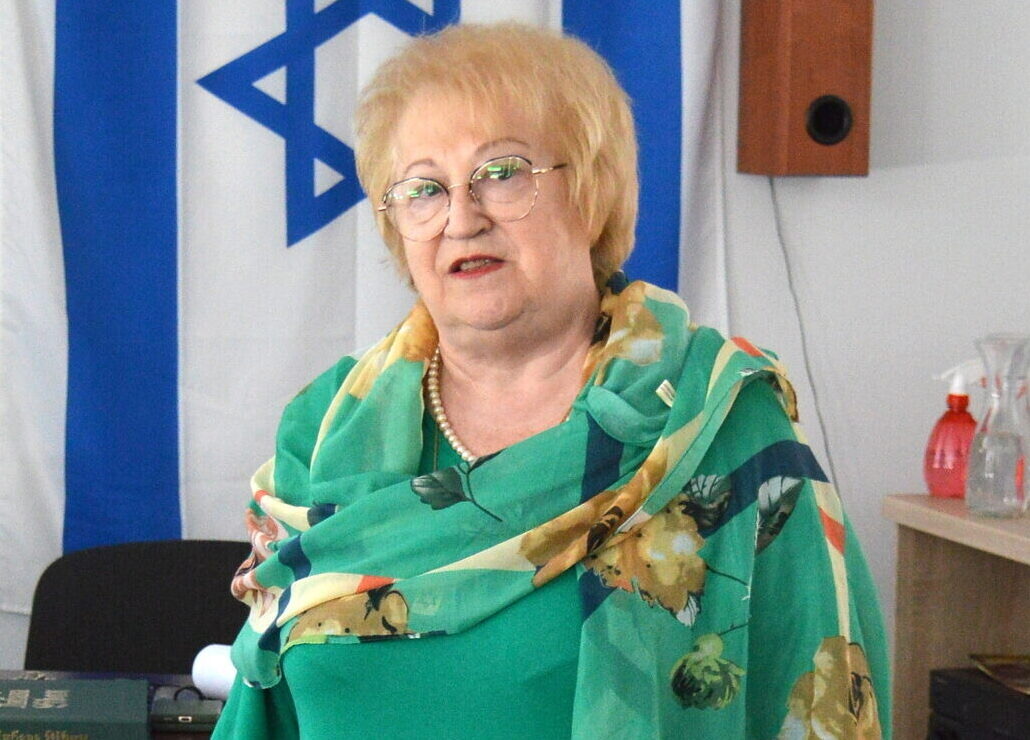
LIEPĀJA, Latvia — Families from Israel stood beside the Baltic this summer as a new Holocaust memorial was dedicated at the Liepāja lighthouse, and much of what brought them there traces back to one woman. Ilana Ivanova (Zivson), the daughter of two survivors from this port, is celebrating her 80th birthday. I have long called her “the soul of this community, a living memory”.
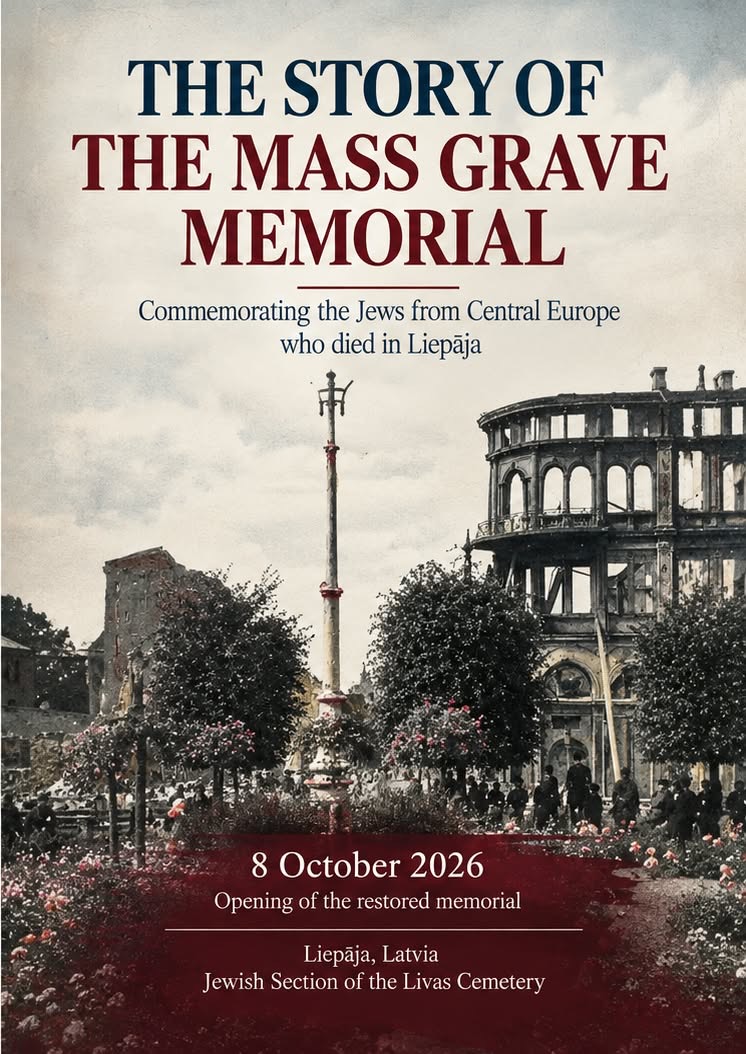
Earlier this month, on 8 October 2026, another memorial was opened in Liepāja after restoration: the mass grave memorial in the Jewish section of the Livas Cemetery, commemorating the Jews from Central Europe who died in the city.
Descendants come home to the Baltic shore
The dedication took place on 24 July 2026 at Roņu iela 8C. In the summer of 1941, that spot saw one of the earliest mass killings of the town’s Jews; the memorial now honours more than 2,000 people murdered there. After Šķēde, it is the second large site in Liepāja devoted to Holocaust remembrance.
It was unveiled during the 13th World Reunion of the Jews of Liepāja, once known as Libau. Some 180 people from eight countries attended. Many had travelled from Israel; others came from America, Germany, Britain and beyond. With diplomats and municipal leaders at their side, they retraced the streets their grandparents had known.
Those reunions are among the initiatives Ilana launched and organised, as listed in a document prepared by her daughter, Anna Petrova, who heads the Liepāja Jewish Religious Community and describes herself as belonging to the third generation after the city’s survivors.
The dunes of Šķēde, and an alley honouring rescuers
Long before the lighthouse, there was Šķēde. The Liepāja Jewish Heritage Foundation, active since 2004, raised a vast menorah among the sand dunes there to commemorate the murdered Jews of the town. Beyond it runs a path dedicated to the Righteous Among the Nations, inaugurated at the 2014 reunion while Israel’s ambassador looked on.
Ilana’s list of projects goes further: memorial initiatives, exhibitions and conferences, educational and cultural programmes, and books of local history. One of them is an electronic volume entitled The Jewish Heritage of Liepāja in the Context of the City’s History. Another remembers Otto Fischer, an Austrian Jew who coached Olimpija Libau to a national championship and who was killed in 1941 for being Jewish. Today a plaque at the club’s stadium and a tournament for young players keep his name alive.
In her daughter’s words, Ilana’s efforts turned what she inherited into books, monuments, gatherings, teaching and institutions meant to outlast her generation.
A cellar, a Righteous rescuer and photographs smuggled out
Why this cause? Because Ilana’s own story begins in hiding. Under German rule nearly 6,000 Jews lived in the town; of those present then, only about thirty survived to see it freed. Her parents, David and Henny Zivson, were two of them.
Roberts and Johanna Seduls concealed eleven Jews in a hidden basement for nineteen months. Discovery could have come at any moment. Shortly before liberation, Roberts died, struck by shrapnel, yet his widow kept feeding and protecting the group until the end. Jerusalem’s Yad Vashem named Johanna Sedule Righteous Among the Nations in 1981.
Ilana’s father risked even more. Pressed into service as an electrician by the German security police, he spotted pictures of the Šķēde shootings in the office of the SS officer Karl-Emil Strott and duplicated them in secret. The German Resistance Memorial Center states that his copies were produced as evidence at Nuremberg and at the Grauel trial.
Kungu iela 21: a small congregation that refuses to disappear
Remembrance is only part of Liepāja’s Jewish life today. In the community building at Kungu iela 21, members gather on Shabbat, read and study Torah, and mark Rosh Hashanah, Hanukkah, Pesach and other holy days. Concerts, talks and classes fill the calendar, and older members receive practical help. A museum on the community and its heritage is taking shape in the same building, intended to show the lives of Liepāja’s Jews and not merely their deaths.
The congregation partners with the municipality, Jewish bodies in Latvia and overseas, foreign embassies and other partners, and it receives visitors from Israel and elsewhere who arrive in search of family roots.
Anna Petrova admits the numbers of the prewar era will never return. Still, she writes, the community exists and is alive, and more than eight decades after the attempt to wipe it out, Shabbat candles are lit again in Liepāja.
That flame owes much to her mother. Happy 80th birthday, Ilana: mazal tov, ad meah ve’esrim.
Leave a Reply