האחדות
The Unity
Shchunat Ezrat Yisrael, Yerushalayim · Since 1910
Tel Aviv Apartment

Tel Aviv Apartment

Author: arik idan

  • Nahariya: 800 new homes as the Remez block leads the city’s urban renewal

    Three years after it was officially designated, the Remez block in the heart of Nahariya is coming before the Northern District planning committee: eleven ageing buildings are set to make way for 800 new homes. It is a vote of confidence in the capital of the Western Galilee, which is making urban renewal the engine of its growth.

    Nahariya is speeding up its transformation. According to the specialist planning site Magdilim (18 October 2026), the Northern District planning committee has placed on its agenda a first hearing on the Remez block, with the aim of restricting the issue of building permits under Sections 77-78 of the Planning and Building Law. The goal is to prevent piecemeal construction from undermining the economics of a large demolition-and-rebuild (pinui-binui) project of 800 homes [1]. As of 22 October 2026, the planning register lists plan no. 210-1242833 at the “preparation of the Section 77/78 notice” stage, covering 33.98 dunams [2].

    KEY FACTS & FIGURES

    • 800 – homes planned in the Remez block, versus 173 today (Magdilim, 18/10/2026).
    • ≈ 30,000 – additional homes allowed by the comprehensive urban renewal plan (ice, 18/02/2026).
    • NIS 16,714 – median price per sq m, H1 2026, +1% (GoInfo / Israel Tax Authority, updated 18/10/2026).
    • NIS 1.595m – median price of a four-room apartment, Jan–Aug 2026 (Nadlanit / nadlan.gov.il, data as of 16/10/2026).

    A city-centre block completely redesigned

    The site covers 34 dunams around David Remez Street. The plan calls for demolishing 11 buildings with a total of 173 apartments, three commercial units and a kindergarten, and replacing them with eight residential buildings – roughly 4.6 times the current number of homes [1][3]. Most of the new construction will stay in keeping with the city’s scale, up to ten storeys, with a few towers along Weizmann Street, the main thoroughfare, which will get a commercial frontage. A new street will link Weizmann to David Remez, the existing “Remez Park” will be preserved, and public facilities will be built on the ground floors and on Balfour Street [1].

    The project is being promoted by the Government Authority for Urban Renewal and Nahariya Municipality, with plans drawn up by the architecture firm Kika Braz. It was declared a pinui-binui compound three years ago; the local committee recommended freezing permits there about three months ago [1].

    A master plan for 30,000 homes

    Remez is part of a wider strategy. In February 2026, the Northern District planning committee approved, subject to conditions, a comprehensive urban renewal plan covering the entire municipal area: it sets a framework for adding about 30,000 homes, serves as an alternative to TAMA 38 and allows older buildings to be strengthened and protected, with at least 20% small apartments for young couples [4]. Northern District planner Dikla Adi Peretz called it a “groundbreaking” plan, especially important “at this time” because it allows permits to be issued for strengthening buildings [4].

    Other projects are following. In early September 2026, the district committee approved the deposit of the Levi Eshkol project in the east of the city: two buildings with 36 apartments will be replaced by three towers of 10, 18 and 24 storeys with 198 homes, described as a “springboard” for the renewal of the eastern neighbourhoods [5]. Near the railway station, the Central Station compound – 1,100 homes on about 79 dunams – is on the fast track for preferred housing compounds (VATMAL), with “declared” status [6]. In the new Saar neighbourhood, the Israel Land Authority awarded two plots for 272 homes in January 2026, about 218 of them at target price, starting from NIS 701,000 for 85 sq m – a discount of roughly NIS 600,000 on the open-market price [7][8].

    A resilient market that is still affordable

    On prices, the city is holding firm. According to Israel Tax Authority data compiled by GoInfo, the median price reached NIS 16,714 per sq m in the first half of 2026 (+1% over six months), despite a 38% drop in the number of transactions – a smaller fall than the Galilee median (-46%) [9]. The median price of a four-room apartment stood at about NIS 1,595,000 in January–August 2026 [10]. According to Bizportal (27 September 2026), Nahariya remains one of the last cities where a four-room apartment within walking distance of the sea costs less than NIS 2 million [8].

    On the ground, confidence is returning. “People have got used to the security situation and have come back to the market,” a local real-estate agent told Globes in August, also noting the arrival of investors from the centre of the country [11]. The message is clear: the great coastal city of the north is actively building its future.

    Sources

    1. Magdilim, Ziv Goldfisher, “התחדשות עירונית בנהריה: העירייה מקפיאה את הבנייה במתחם רמז לטובת 800 דירות חדשות”, 18/10/2026 – https://magdilim.co.il/181020261101/
    2. Tabainfo, plan 210-1242833 “David Remez compound – Section 77-78 notice”, updated 22/10/2026 – https://www.tabainfo.co.il/%D7%AA%D7%91%D7%A2/%D7%A0%D7%94%D7%A8%D7…
    3. Nadlano, “הקפאת היתרים בלב נהריה: 11 בניינים ייהרסו לטובת 800 דירות במתחם רמז”, 18/10/2026 – https://nadlano.co.il/178052
    4. ice, “אלפי דירות חדשות ייבנו בעיר המבוקשת”, 18/02/2026 – https://www.ice.co.il/realestate/news/article/1103508
    5. Magdilim, “תכנית לוי אשכול בנהריה גברה על התכנית להתחדשות עירונית”, 06/09/2026 – https://magdilim.co.il/060920260910/
    6. ERRA Analytics, “נהריה – התחנה המרכזית – ותמ”ל” (plan TML/2071), updated 25/10/2026 – https://erra-analytics.co.il/program/vatmal-nhryh-hthnh-hmrkhzyt/
    7. Israel Land Authority (gov.il), “תוצאות מכרז דיור במחיר מטרה בנהריה”, 05/01/2026 – https://www.gov.il/he/pages/declaration-pr-0512026
    8. Bizportal, Ben Palmon, “כמה צריך להרוויח כדי לקנות דירה בנהריה?”, 27/09/2026 – https://www.bizportal.co.il/realestates/news/article/20043362
    9. GoInfo, Nahariya summary Jan–Jun 2026 (Israel Tax Authority data), updated 18/10/2026 – https://goinfo.co.il/city-news/nahariya.html
    10. Nadlanit, “נדל”ן בנהריה: מחירים 2026” (nadlan.gov.il data as of 16/10/2026) – https://nadlanit.co.il/city/Nahariyya
    11. Globes, Nir Weiss-Vedereru, “בבניין עם אופק לפינוי־בינוי: בכמה נמכרה דירת 3 חדרים בנהריה?”, 22/08/2026 – https://www.globes.co.il/news/article.aspx?did=1001552641
  • Moving to Tel Aviv? How Israel’s Health Kupot — and Vet Care — Work in 2026

    Moving to Tel Aviv? How Israel’s Health Kupot — and Vet Care — Work in 2026

    By Arik Idan — Tel Aviv Apartment / The UNITY

    Tel Aviv — 20 September 2026. If you are signing a lease, buying a flat, or landing as an oleh this autumn, two apartment-life questions land on day one: which kupat holim (health fund) you join, and — if a dog or cat is part of the move — where the nearest vet and emergency clinic sit. Israel runs universal resident coverage through four competing kupot, world-class hospitals a short ride from the city, and one of the densest pet-care networks on the Mediterranean. This is the practical map for September 2026 — not a festival calendar, a relocation desk note.

    Four kupot, one basic basket — how coverage actually works

    Every Israeli resident is attached to one of four public health funds financed through the National Insurance Institute (Bituach Leumi): Clalit, Maccabi, Meuhedet and Leumit. Each delivers the statutory “health basket” (basic package of doctor visits, hospital care, medicines and procedures) and sells optional complementary insurance at relatively accessible premiums. You choose a fund; you do not go without a fund if you are a covered resident.

    • Clalit Health Services — the largest fund, covering more than half of residents; owns a major hospital network (including Soroka, Meir and Schneider Children’s) and well over a thousand neighbourhood clinics.
    • Maccabi Healthcare Services — roughly a quarter of the population; known for advanced digital tools, a wide specialist network and links to the Assuta private hospital chain.
    • Meuhedet — strong in big cities and Jerusalem; emphasises personal family medicine and faster primary-care access.
    • Leumit — dense local medical centres; stresses personalised follow-up and complementary therapies.

    For olim and new renters: register with a kupah as early as your residency status allows, keep the membership card on your phone, and use the fund’s app for appointments and shared medical records. Switching funds is possible under Israeli rules, but start with one and learn its clinic map near your new address — Florentin, Old North, Ramat Aviv and Jaffa do not all share the same branch density.

    Hospitals near Tel Aviv life: Sheba, Ichilov, Hadassah, Rabin

    Israel’s hospital network mixes government, public and private campuses. For Tel Aviv apartment life the names you will hear most are Sheba Medical Center (Tel Hashomer, Ramat Gan), Tel Aviv Sourasky Medical Center (Ichilov), Hadassah in Jerusalem, and Rabin Medical Center / Beilinson in Petah Tikva — centres that routinely appear in international rankings for oncology, cardiology, transplants and advanced surgery.

    Newsweek’s World’s Best Hospitals lists, compiled with Statista, have repeatedly placed Sheba among the global top ten — 8th worldwide in the 2025 edition and 7th in the 2026 edition, according to Sheba Global and Globes. Ichilov, Hadassah Ein Kerem and Rabin/Beilinson have also ranked inside Newsweek’s broader world lists in recent cycles. Rankings are not a guarantee for your next ER visit; they are evidence that tertiary care capacity sits inside ordinary commuting distance of a Tel Aviv lease.

    Emergencies go to the nearest appropriate ER; elective care usually routes through your kupah’s referral rules. Keep your kupah card, ID and any complementary-insurance details with your lease paperwork — landlords do not handle this, but moving day is when people forget it.

    Tel Aviv as dog capital — 700+ clinics and Koret Beit Dagan

    Tel Aviv is widely nicknamed a world dog capital: high pet ownership, dedicated dog parks, and dog-friendly stretches of Mediterranean beach. The veterinary layer matches that culture. Industry and Unity briefings put the active private and clinic network in the 650–700+ range nationwide, with neighbourhood clinics in most municipalities and 24/7 veterinary hospitals offering imaging (MRI/CT), intensive care and major surgery.

    The national referral hub for complex animal medicine is the Koret School of Veterinary Medicine / University Veterinary Teaching Hospital at Beit Dagan, linked to the Hebrew University — the centre you hear about when a neighbourhood clinic escalates a case. For a renter: before you sign, confirm the building’s pet clause, nearby off-leash parks, and the after-hours vet number you will actually call at 2 a.m.

    Pet insurance and digital health — what to budget

    Alongside human complementary cover, Israelis use private pet insurance and clinic membership plans (names commonly cited include Haphenix Pet and Shirbit, plus direct clinic subscriptions) for consultations, surgery, vaccines and emergency care for dogs and cats. Compare exclusions the way you would a human policy: waiting periods, breed rules, and whether ER visits are in-network.

    On the human side, shared digital records, app booking and tele-consultation are now normal across the kupot. That is the quiet advantage for someone new to the city: you can find a Hebrew/English-speaking family doctor, book bloodwork, and locate an ER without knowing every street yet. Pair that with a written list of your building’s nearest kupah clinic, pharmacy and vet — tape it inside a kitchen cupboard if you must.

    Bottom line for olim, renters and buyers: On 20 September 2026 the practical Tel Aviv package is four kupot (Clalit, Maccabi, Meuhedet, Leumit) for universal resident care, tertiary hospitals including Sheba (Newsweek world top-ten in 2025–2026), Ichilov, Hadassah and Rabin/Beilinson within reach, plus 700+ vet clinics and Koret Beit Dagan for pets — register your kupah early, check the lease’s pet clause, and save the after-hours vet and ER routes before the first weekend in the flat.

    FAQ

    What are the four Israeli health kupot?

    Clalit, Maccabi, Meuhedet and Leumit. Every Israeli resident joins one. They deliver the statutory health basket funded via Bituach Leumi and sell optional complementary insurance.

    Which hospitals matter most if I live in Tel Aviv?

    Sheba (Tel Hashomer), Ichilov (Tel Aviv Sourasky), Rabin/Beilinson (Petah Tikva) and Hadassah (Jerusalem) are the names most often cited for advanced care. Sheba ranked 8th globally in Newsweek’s 2025 list and 7th in the 2026 list.

    Is Tel Aviv really a “dog capital,” and how many vet clinics are there?

    Pet ownership is exceptionally high and the city maintains many dog parks and dog beaches. Briefings for this guide put Israel’s active veterinary clinic network in the 650–700+ range, with 24/7 emergency hospitals and the Koret University Veterinary Teaching Hospital at Beit Dagan as the national referral centre.

    Do I need pet insurance in Israel?

    It is optional but widely used. Private pet policies and clinic membership plans can cover consultations, surgery, vaccines and emergencies. Read waiting periods and exclusions carefully.

    What should a new renter or oleh do in the first week?

    Join or activate a kupah, download its app, locate the nearest clinic and ER, confirm pharmacy hours, and — if you have a pet — verify the building’s pet rules and the nearest 24/7 vet.

    Sources

    1. Newsweek / Statista — World’s Best Hospitals 2025
    2. Sheba Global — 2026 World’s Best Hospitals list
    3. Clalit Health Services — official site
    4. Maccabi Healthcare Services
    5. Koret School of Veterinary Medicine / Hebrew University

  • Israel’s Financial System and the Tel Aviv Stock Exchange Hold Firm — What Buyers Should Know (Sept 2026)

    Israel’s Financial System and the Tel Aviv Stock Exchange Hold Firm — What Buyers Should Know (Sept 2026)

    By Arik Idan — Tel Aviv Apartment / The UNITY

    Tel Aviv — 20 September 2026. Israel’s foreign-exchange reserves closed August at a record $241.641 billion — up $2.850 billion from July and equal to 34.9% of GDP — the Bank of Israel reported on 7 September. For anyone buying, remortgaging or signing a long lease in Tel Aviv this autumn, that peg matters: a central bank with deep FX firepower, five large banks that kept capital buffers above Basel-style floors, and a Tel Aviv Stock Exchange (TASE) that still clears trades through geopolitical noise. Soft headlines about volatility are real; a frozen mortgage market is not what the official data describe.

    The monthly rise was driven mainly by asset revaluation (about $2.590 billion) and government foreign-currency activity (about $330 million) — mechanical balance-sheet moves, not a crisis print.

    Those reserves sit behind the shekel and behind domestic credit. The Bank of Israel’s job in this cycle has been familiar: steer interest rates, manage liquidity, and keep credit flowing to households and firms even when risk premia spike. For a Tel Aviv buyer, the practical read is continuity of mortgage and construction finance — not a promise that rates will fall next week.

    Supervisors have also pushed temporary borrower-relief frameworks alongside structural competition work; the point for apartment readers is that the system was built to absorb shocks without shutting the mortgage window overnight.

    Digital banking is now the default channel for many households. That matters less as a tech boast than as operational continuity: statements, transfers and loan paperwork keep moving when physical branches are quieter. Targeted, time-limited mortgage and business-loan relief measures have appeared in past stress windows; treat those as temporary policy tools, not a permanent discount on your rate sheet.

    TASE: TA-35, TA-125, and what the exchange

    Bank equities are a large share of that tape. Robust balance sheets at the five majors help explain why market stress has often meant volatility and wider spreads rather than a trading halt. Energy and export-oriented tech listings supply a second pillar. None of that is investment advice; it is the plumbing that sits next door to the housing market’s funding chain.

    Export-oriented tech, VC themes, and structural housing demand

    Israel’s growth story still runs on a dual track: an export-oriented high-tech sector that sells most of its product abroad, and a domestic economy of construction, retail, services and energy listed and financed at home. Venture and institutional capital continue to favour themes such as cybersecurity, climate-tech, AI and defence-tech — sectors that tend to invoice in foreign currency and keep cash flowing when local demand

    What Tel Aviv buyers and renters should actually do with this

    Three practical checks beat a macro lecture. First, ask your bank or broker whether your mortgage track (prime, fixed, or mixed) still prices normally and what documentation they need this month — continuity of process is the signal.

    Bottom line for renters and buyers: On 7 September 2026 the Bank of Israel confirmed end-August FX reserves at a record $241.641 billion (+$2.850bn vs July; 34.9% of GDP), while the five major banks and TASE (TA-35 / TA-125) kept clearing credit and trades through geopolitical stress — plan your Tel Aviv mortgage and lease on documented continuity of bank credit and structural housing demand, not on rumour.

    FAQ

    How large were Israel’s foreign-exchange reserves in August 2026?

    According to the Bank of Israel’s 7 September 2026 press release, reserves at end-August 2026 stood at $241.641 billion (exactly $241,641 million), up $2.850 billion from end-July, equal to 34.9% of GDP. Globes reported the same peak the same day.

    Which banks dominate Israel’s commercial banking system?

    Five large groups anchor the system: Bank Leumi, Bank Hapoalim, Israel Discount Bank, Mizrahi-Tefahot, and First International Bank of Israel (FIBI). Bank of Israel supervisory publications for 2025 described capital and liquidity ratios as remaining high, with CET1 buffers above regulatory requirements.

    What are TA-35 and TA-125 on the Tel Aviv Stock Exchange?

    They are TASE’s main benchmark equity indices. TA-35 tracks the largest listed companies; TA-125 is a broader large- and mid-cap benchmark. Bank, energy and tech names heavily influence both — which is why banking-system resilience shows up in market plumbing as well as in loan desks.

    Second, separate listing medians and sale-price indices from your building’s comparable flats; national resilience does not freeze every asking price. Third, if you are an oleh or a foreign buyer, plan FX conversion and transfer timing against BoI and bank calendars, not against social-media panic about “collapse.”

    Public-debt discipline, keeping foreign capital engaged on TASE, and broadening workforce participation in tech remain the medium-term policy tests the French and English Unity briefings both flag. They are watch-list items, not a reason to abandon a well-underwritten purchase.

    softens.

    On housing, the structural point is demographic pressure, not a single month’s index print. Population growth and household formation keep a floor under long-term demand for homes in the Tel Aviv metro even when sale prices wobble year on year and when geopolitical risk premia rise. Temporary tension in construction or sales volumes does not cancel the need for roofs; it changes negotiating tempo. For TAA readers, that means treat “soft sale prices” and “firm rents” as separate questions — and treat bank credit availability as a third.

    tually clears

    The Tel Aviv Stock Exchange is Israel’s primary listed-capital venue. Benchmark indices TA-35 and TA-125 concentrate the country’s largest banks, energy names (including natural-gas exposure) and listed tech and industrial names. When geopolitics hits the tape, the exchange still functions as a price-discovery and clearing venue aligned with international trading standards — which is why institutional money can stay engaged even when sentiment is sour.

    Five banks, CET1 buffers, and credit that kept moving

    Israel’s commercial banking core remains five large groups: Bank Leumi, Bank Hapoalim, Israel Discount Bank, Mizrahi-Tefahot, and First International Bank of Israel (FIBI). The Bank of Israel’s banking-system survey for the first half of 2025 described capital and liquidity ratios as remaining high, with CET1 around the mid-11% range and well above regulatory minima — a Basel III–style buffer story, not a under-capitalised one.

    The September peg: record FX reserves, not a rumour

    On 7 September 2026 the Bank of Israel published its monthly reserves release: end-August holdings stood at $241,641 million, an increase of $2,850 million from end-July. Reserves relative to GDP were 34.9%. Globes carried the same figures the same day, calling the level a new peak.

  • Tishrei in Tel Aviv: Hours Before Yom Kippur — Then Sukkot on the Balconies

    Tishrei in Tel Aviv: Hours Before Yom Kippur — Then Sukkot on the Balconies

    By Arik Idan — Tel Aviv Apartment / The UNITY
    20 September 2026 — a few hours before Yom Kippur in Israel

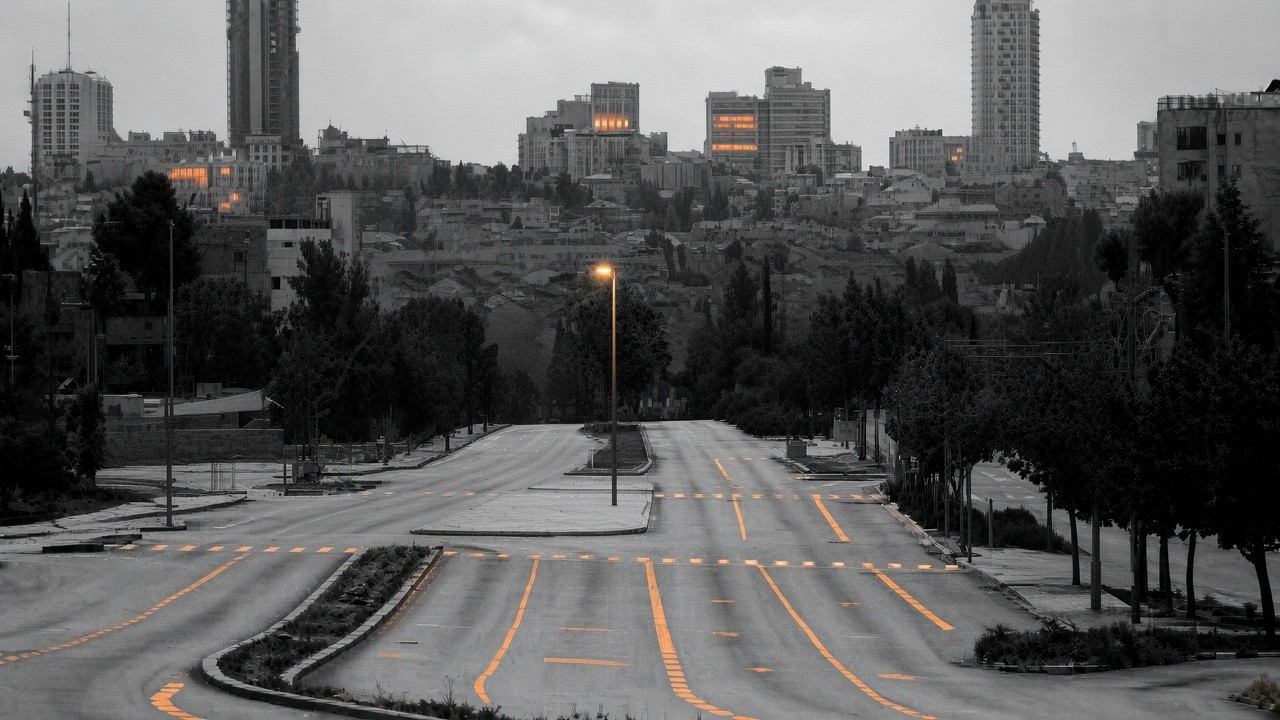
    Tel Aviv — In a few hours, this city’s noise will drop. Highways empty. Children bike the boulevards. White clothes appear on the sidewalk. That is not metaphor. It is the annual fact of Yom Kippur in Israel — and if you rent or buy here, it is how the apartment building breathes for twenty-five hours.

    The High Holidays this year form a single arc. Yom Kippur begins at sundown on 20 September 2026 (fast day 21 September); Sukkot opens at sundown on 25 September and runs through 2 October. First the silence. Then the temporary huts under the sky.

    Hours before the fast: Tel Aviv stops as one

    As early autumn settles over Israel, the summer heat yields to a soft evening breeze and the frantic rhythm of daily life slows. In the days — and now the hours — leading up to Yom Kippur, the Day of Atonement, the country enters a pause unlike any other on Earth.

    From the avenues of Tel Aviv to Jerusalem, from the northern hills to the southern desert, sunset clears motor traffic. Boulevards become walkways. Children ride empty expressways. People in white gather outside synagogues and neighbourhood corners. Media, commerce and transport yield to a national stillness meant for inner listening.

    Four marks of the day, familiar to anyone who has lived a full year in an Israeli building:

    • White garments — humility, a clean slate, a brief equality of dress in the stairwell and on the street.
    • Slichot and forgiveness — Gmar Chatimah Tovah exchanged with neighbours and strangers.
    • Kol Nidre — the opening prayer, ancient melodies in crowded halls and open-air gatherings.
    • Twenty-five hours of stillness — no cars, muted commerce, a quiet shaft of the building.

    This year the day also carries national weight: a pause to honour the dead, to pray for safety, and to hold a community bound by memory and mutual care. Rather than a purely solemn fast, it radiates a quiet, resilient strength — hope and togetherness without slogans.

    For apartment dwellers the practical translation is blunt. Finish shopping and travel before candle-lighting. Expect silence in the stairwell. Expect empty roads if you walk — and almost no cars if you thought you needed one. As the fast ends, synagogues overflow for Ne’ilah; the long blast of the shofar returns the city to light, food, and ordinary noise.

    After the shofar: Sukkot comes to the balcony

    Five days later the same balconies change costume. Sukkot — the Feast of Tabernacles, also called Zman Simkhatenu, the season of our joy — turns roofs, courtyards and apartment terraces into temporary homes. Families raise a sukkah: a hut open enough to glimpse the stars, lived in for meals and, where possible, for seven days of hospitality.

    In Tel Aviv blocks the festival climbs the façades: shared roofs and balconies fill with frames and foliage, children hang paper lanterns, hammers echo for a morning after Ne’ilah. Pop-up markets sell the Four Species — etrog, lulav, hadass, arava — held and waved to the four directions, a ritual of unity made visible. The city does not hide the hut. It wears it.

    Under the tradition of Ushpizin — spiritual guests of honour, and real ones too — doors open. Travellers, cousins, and the person from 4B sit under string lights. For renters weighing a lease, this week is a live demo of Israeli density done as hospitality.

    What renters and buyers should clock this week

    • Yom Kippur (sundown 20 Sept → nightfall 21 Sept): no traffic, full fast for observers, quiet buildings; plan before sundown.
    • Sukkot (sundown 25 Sept → 2 Oct): balcony and roof sukkahs; Chol HaMoed mid-week; holiday rhythm for schools and many offices.
    • Building reality: many apartments host a sukkah on the balcony or roof — part of how the building keeps the season.

    Bottom line. A few hours from now, Tel Aviv goes quiet for Yom Kippur. From 25 September, the same balconies grow sukkahs. Living here means both: the sealed day of reflection, then the fragile roof and the open table. True strength, as this city shows each autumn, springs from empathy, togetherness, and the belief that tomorrow still opens.

    FAQ

    When is Yom Kippur 2026 in Israel?

    It begins at sundown on 20 September 2026 and ends at nightfall on 21 September 2026.

    When is Sukkot 2026 in Israel?

    Sukkot begins at sundown on 25 September 2026 and ends at nightfall on 2 October 2026, followed by Shemini Atzeret / Simchat Torah.

    Can you build a sukkah on a Tel Aviv apartment balcony?

    Yes — balcony and roof sukkahs are a familiar part of Tishrei in Tel Aviv apartment life. Build safely and enjoy the week under the leaves.

    Do Tel Aviv apartment buildings stay open during the High Holidays?

    Yes. Yom Kippur is quiet and mostly closed for traffic and commerce; Sukkot is festive, with many balconies hosting sukkahs. Building services vary — ask your va’ad bayit.

    Sources

    1. Time and Date — Holidays in Israel 2026 (Yom Kippur, Sukkot)
    2. Hebcal — Sukkot 2026 (Israel)
    3. Chabad.org — When Is Sukkot in 2026
  • After October 7, Israel Is Arming Its Citizens — and Saving Lives

    After October 7, Israel Is Arming Its Citizens — and Saving Lives

    In short: since late 2022, the number of Israelis licensed to carry a firearm has risen from about 155,000 to more than 350,000. The number of women license holders has more than tripled. For Israel, this is a direct answer to October 7: when terror strikes, the first seconds are often in the hands of the citizens already on the scene.

    October 7: the lesson of the first minutes

    On October 7, 2023, residents of the kibbutzim in the south waited hours for help to arrive. Where local rapid-response teams were armed and ready, communities held out. Where they were not, the terrorists had free rein.

    Israel learned that lesson. No army, however powerful, can be at every bus stop, on every street, at every moment. The conclusion was unavoidable: a trained, armed citizen is often the only person able to act in the decisive window before security forces arrive.

    The numbers behind a national mobilization

    Indicator Before Today
    License holders ~155,000 (late 2022) 350,000+ (2026)
    Women license holders (private or professional) ~8,300 (2022) 29,000+ (June 2026)
    Newly eligible localities 23 (2023), 21 (2024), 80 (2025) 126 (2026, ongoing)

    These figures do not reflect a fascination with guns. They reflect the determination of hundreds of thousands of families never to be defenseless again.

    Civilians who stopped terrorists

    The doctrine has proven itself on the ground. On November 30, 2023, terrorists opened fire at a bus stop at the entrance to Jerusalem; they were neutralized within seconds by off-duty soldiers and an armed civilian. On September 8, 2025, at Ramot Junction, the attack was stopped by a soldier on leave and a civilian carrying his weapon.

    Each time, the toll could have been far heavier. Israeli security officials say armed civilians have helped thwart or cut short numerous attacks in recent years. The ministry calls them a genuine “force multiplier.”

    Women refuse to be targets

    The most striking growth is among women: from roughly 8,300 license holders in 2022 to more than 29,000 in June 2026 — an increase of over 250%.

    Mothers, teachers, nurses, residents of exposed communities: many had never held a gun before. October 7, when women were among the first victims of targeted barbarity, changed their outlook. They no longer want to depend on help that may come too late to protect their children.

    A map that follows the threat

    The reform replaced a purely bureaucratic logic with a field-based one: residents of the most exposed areas can now apply for a license. Communities near Gaza and Lebanon, Judea and Samaria, Jerusalem neighborhoods — in March 2026, in the middle of the war with Iran, 41 neighborhoods of the capital were made eligible.

    Strict rules, far from the American model

    Arming citizens does not mean arming anyone. In Israel, carrying a firearm is not a right but a permit, still subject to strict conditions:

    • a minimum age;
    • a clean criminal record;
    • a medical certificate of physical and mental fitness;
    • mandatory firearms training.

    There are critics. Courts have examined licenses issued in the emergency of autumn 2023, and advocacy groups have raised concerns about risks inside the home. But the system has shown it can correct itself: irregular files have been reviewed and weapons withdrawn. A democracy that scrutinizes its own procedures does not weaken its reform — it strengthens it.

    A society built on resilience

    Israel has always relied on the commitment of its citizens: a conscript army, reservists, local security teams. The armed civilian is part of that tradition. Facing an enemy that deliberately targets civilians, the nation has chosen not to leave them defenseless.

    October 7 was meant to spread terror. It produced the opposite: a people determined to protect itself.

    FAQ

    How many Israelis have a gun license? More than 350,000 in 2026, up from about 155,000 in late 2022.

    Why did Israel ease access to firearms? To allow civilians to respond in the first seconds of a terror attack, before security forces arrive — a lesson of October 7.

    Have armed civilians stopped terror attacks? Yes, including at the entrance to Jerusalem in November 2023 and at Ramot Junction in September 2025.

    How many Israeli women carry a gun? More than 29,000 as of June 2026, up from about 8,300 in 2022.

    Sources

    • Israeli Ministry of National Security
    • Knesset National Security Committee
    • Times of Israel
    • TPS
    • Arutz Sheva
  • IDF chief calls Venice film NAZA a blood libel, opens legal probe

    IDF chief calls Venice film NAZA a blood libel, opens legal probe

    JERUSALEM / VENICE — Sept. 14–15, 2026. IDF Chief of Staff Lt. Gen. Eyal Zamir has branded the Venice prize-winning film NAZA a “blood libel” and ordered legal and security reviews — rejecting claims that Israel deliberately built a system to kill civilians in Gaza.

    The 80-minute British documentary, directed by Yuval Abraham and Rachel Szor and produced with The Guardian, won a Special Jury Prize at the Venice Film Festival. It leans on 24 anonymized Israeli soldiers and intelligence personnel. Faces are hidden. Voices are altered. Viewers cannot check who they are, what they did, or whether they ever sat in the rooms where targeting decisions were made.

    The core fact: a festival film that presents an indictment as if it were a verdict — while the IDF says the allegations were never put to the army in a form that allows a professional reply.

    What Zamir wrote to IDF troops

    In a letter to soldiers and commanders dated Tishrei 5787 / September 2026, Zamir said he had not watched the film, did not know who was interviewed, and did not know who stands behind it. He wrote that the claims and events were not presented to the IDF, making a serious, professional response difficult.

    He then ordered a multidisciplinary team to confront what the military calls false allegations, told the Military Advocate General to examine legal options, and opened a probe into possible unauthorized disclosure of classified material used in the production. According to Israeli reporting, Zamir called the film’s narrative blood libels, deliberate distortions, and grave false accusations — an attack on the State of Israel, not only on the IDF.

    Who made NAZA — and what they already assume

    Abraham writes for +972 Magazine, which frames Israel as “occupation” and “apartheid.” With Szor he previously co-directed No Other Land (Oscar 2025), built around a Palestinian narrative against Israel. In their own Venice synopsis, the directors say they set out to examine mechanisms behind what they already call the mass killing of Palestinian civilians for which their country is responsible.

    The thesis is not discovered on screen. It is declared up front by the filmmakers.

    Another turn of Pallywood

    This is another turn of Pallywood: a political accusation packaged as cinema, where anonymity replaces verification and a festival ovation replaces cross-examination. Filmmaker Pierre Rehov has documented how staged and manipulated imagery is used against Israel. His film remains a reference:

    Pierre Rehov — Pallywood (YouTube)

    What still has not been proven

    Anonymous sourcing can be legitimate journalism. A charge of intentional, systematic murder of civilians demands far more. Who are the 24 witnesses? What were their exact jobs? What did each person see firsthand? Which independent documents corroborate them? Where are the orders that prove a policy to kill civilians on purpose? How much contrary evidence does the film allow?

    Hamas embeds among civilians and uses them as shields. The IDF says it operates under international law and its own ethical code while fighting that enemy. NAZA asks viewers to treat protected testimony and a pre-set thesis as proof. It does not.

    Belief is not evidence. The filmmaker must prove the case. Until a verifiable, adversarial demonstration exists, NAZA is an indictment — not a verdict.

    FAQ

    What is NAZA?
    An 80-minute UK documentary by Yuval Abraham and Rachel Szor. The title echoes the Hebrew acronym for collateral damage (nezek agavi). It premiered in Venice competition in 2026 and won a Special Jury Prize.

    What did Eyal Zamir do?
    He sent a letter to IDF personnel, rejected the film’s claims as blood libels, and ordered legal review plus an investigation into possible classified leaks.

    Why call it Pallywood?
    Because the film packages a militant narrative as proof without open identities or adversarial corroboration. See Pierre Rehov’s documentation: youtu.be/n7MGhw-SJ5Q.

    Sources

    Arik Idan

EN|FR